You want fuller, perkier breasts. You’ve looked at before-and-after photos online. Some results were achieved with implants alone. Others involved a lift. Some involved both. And now you’re not entirely sure which category you fall into — or what would actually give you the result you’re picturing.
This is one of the most common sources of confusion among women considering breast surgery, and it’s completely understandable. The terminology overlaps, the photos don’t always make it obvious what was done, and well-meaning friends who’ve had surgery themselves often give conflicting advice based on their own experience.
The honest answer is that there is no universal rule. Whether you need a breast lift, implants, or a combination of both depends entirely on your individual anatomy — specifically the position of your nipple, the amount of existing breast tissue, and the degree of skin laxity you have. A surgeon can assess this in a consultation in minutes. But understanding the principles behind that assessment helps you go into that conversation informed, with realistic expectations and the right questions to ask.
This guide explains exactly how surgeons think about this decision — and how you can start to work it out for yourself before you ever set foot in a clinic.
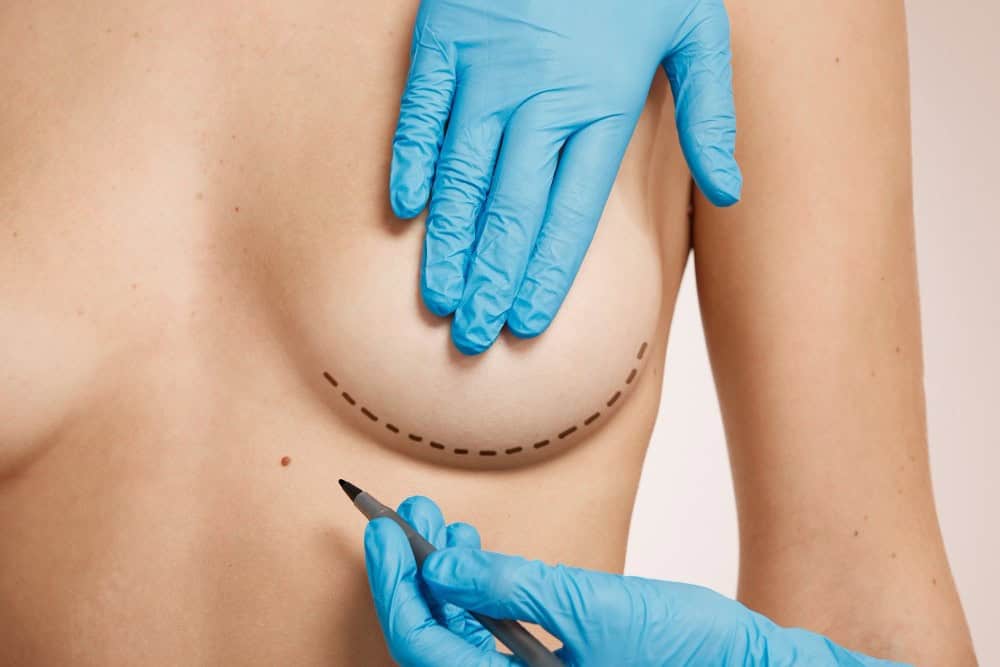
What Is the Actual Difference Between a Breast Lift and Implants?
They sound similar and are often discussed together, but they do fundamentally different things.
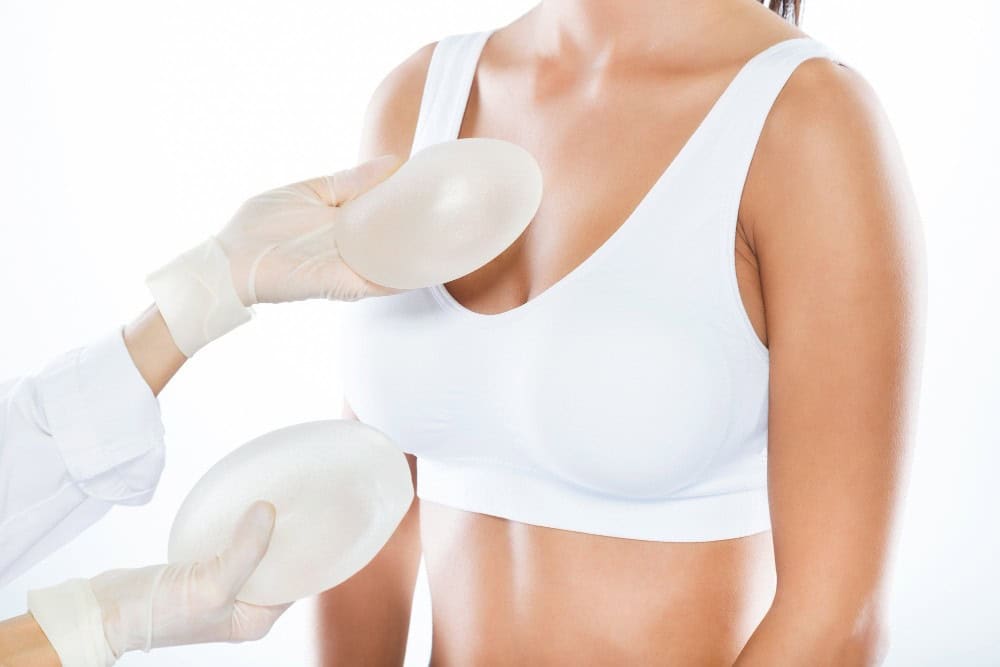
Breast augmentation (implants) adds volume. It makes breasts larger. It can improve fullness in the upper pole of the breast — the area above the nipple — and create more projection. What it cannot do is change the position of the nipple or significantly tighten loose skin. If your nipples point downward or sit below your natural breast crease, implants alone will not fix that. They will make your breasts larger — but larger in the same position they’re already in.
Breast lift (mastopexy) reshapes and repositions. It raises the nipple to a more youthful position, removes excess skin, and tightens the remaining tissue into a firmer, more projected shape. What it cannot do is add volume. A lift on its own leaves you with the same amount of breast tissue you started with — just repositioned. If you feel your breasts are too small as well as sagging, a lift alone won’t give you the fullness you’re looking for.
Breast lift with implants (augmentation mastopexy) does both. It adds volume and repositions the nipple and breast tissue at the same time. It is the most complex of the three options and involves a longer surgery and slightly more involved recovery — but it’s also the procedure that gives the most comprehensive transformation.
The Key Concept: Ptosis
In medical terms, breast sagging is called ptosis (pronounced “toh-sis”). Surgeons classify ptosis on a scale that determines which procedure — or combination of procedures — is appropriate.
The classification is based on the relationship between the nipple and the inframammary fold (IMF) — the crease where the underside of your breast meets your chest wall. This fold is the reference point that doesn’t move, regardless of breast size or shape.
Grade 1 — Mild ptosis: The nipple is at or just below the level of the inframammary fold. The lower breast tissue (called the lower pole) still has a reasonable amount of fullness.
Grade 2 — Moderate ptosis: The nipple sits noticeably below the fold — typically 1–3cm below it. The breast has a deflated quality and the lower pole begins to look elongated.
Grade 3 — Severe ptosis: The nipple sits more than 3cm below the fold and points significantly downward. The breast tissue has migrated below the fold.
Pseudoptosis: This is a special category where the nipple is at or above the fold but the lower breast tissue has dropped below it, creating a “bottomed out” appearance. The breast looks empty on top and heavy on the bottom.
Understanding where you fall on this scale is the single most important factor in determining which procedure is right for you.
The Pencil Test: A Simple Starting Point
Before your consultation, there is a quick self-assessment that gives you a rough idea of your degree of ptosis. It is not a substitute for a surgeon’s assessment, but it’s a useful starting point.
Place a pencil in the crease beneath one breast — in the inframammary fold. Release it and see what happens.
If the pencil falls: Your breast tissue is not holding the pencil against your chest wall. This suggests mild or no ptosis. Implants alone may be sufficient to achieve your goals.
If the pencil stays: Your breast tissue is holding the pencil in place, indicating that the lower breast has dropped below the fold. This suggests at least grade 1 ptosis, and the higher the pencil sits against your body, the more pronounced the sagging.
Again — this is a rough guide, not a diagnosis. A surgeon examining you in person will be looking at nipple position, skin quality, tissue volume, and several other factors simultaneously. But the pencil test gives you a useful sense of where you stand before that appointment.
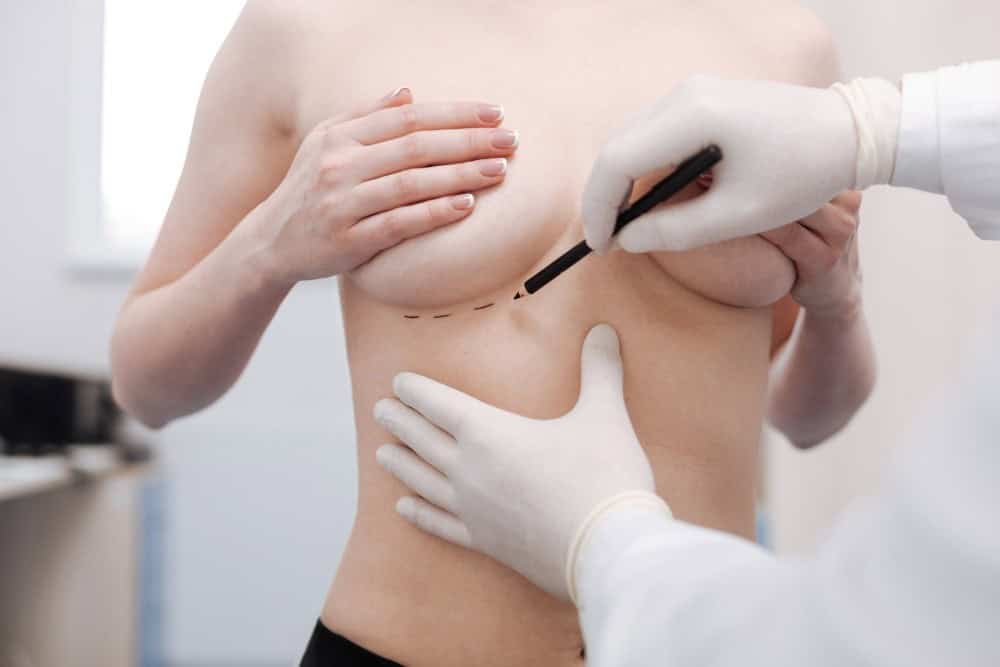
How Surgeons Actually Make This Decision
When a plastic surgeon assesses you for breast surgery, they are evaluating several things at once:
Nipple position relative to the inframammary fold. This is the primary determining factor. If your nipple sits at or above the fold, implants alone are often sufficient. If it sits below, some degree of lift is likely needed.
The direction the nipple points. Nipples that point forward or slightly upward are in a good position. Nipples that point downward — regardless of where they sit on the chest — indicate ptosis that implants alone cannot correct.
Skin elasticity and quality. Skin that has lost elasticity — commonly after pregnancy, significant weight loss, or simply with age — has less ability to contract and reshape itself. Poor skin elasticity favours a lift over implants alone, even in cases where the ptosis is mild.
The amount of existing breast tissue. Women with very little breast tissue often achieve better results from implants alone, even with mild sagging, because the implant itself provides enough volume to fill out and lift the appearance of the breast. Women with more existing tissue and significant sagging need an actual repositioning of that tissue rather than simply adding volume behind it.
Your specific goals. A woman who primarily wants more volume and is happy with her nipple position needs a different approach than a woman who primarily wants her nipples repositioned and is less concerned about size.
Common Scenarios: Which Procedure Fits Which Situation?
Rather than speaking in abstractions, here are the scenarios surgeons see most frequently and what they typically recommend.
“My breasts have always been small and I just want them bigger.”
If your nipple position is good — at or above the fold, pointing forward — and your skin has reasonable elasticity, implants alone are almost certainly the right choice. This is the most straightforward breast surgery scenario.
“My breasts were fine before pregnancy but now they’ve deflated and drooped.”
This is the classic post-pregnancy presentation. Breastfeeding and pregnancy cause the breast tissue to expand and then shrink, often leaving skin that has stretched beyond its ability to contract. The nipple typically drops below the fold. In most cases, this scenario requires either a lift alone (if the patient is happy with the size and just wants things back where they were) or a lift with implants (if volume was also lost and the patient wants to restore fullness).
“I’ve lost a lot of weight and my breasts look empty and saggy.”
Significant weight loss — particularly rapid weight loss — often results in both volume loss and skin laxity simultaneously. The combination almost always calls for a lift with implants. The lift removes the excess skin and repositions the nipple; the implants restore the volume that was lost with the weight.
“My breasts look droopy but I don’t want to go bigger.”
A lift alone is the right procedure here. The goal is repositioning, not enlargement. Many women are surprised to find that a lift without implants can make the breasts appear larger simply because of improved projection and shape — even though the actual volume hasn’t changed.
“I want perky breasts but I’m worried about too much scarring.”
This is where the conversation gets nuanced. A full mastopexy (breast lift) involves more scarring than implants alone — the incision pattern is typically an anchor shape or a lollipop shape, leaving scars around the areola and down to the fold. For patients with mild ptosis, some surgeons may be able to achieve an acceptable result with implants alone or with a periareolar lift (incisions only around the areola), which produces less scarring. However, attempting to correct significant ptosis with implants alone — to avoid the scarring of a lift — consistently produces poor results. The implant creates more volume but cannot overcome the physics of displaced breast tissue and a low nipple.
What About the Scars From a Breast Lift?
Scarring is the most common reason women resist a lift when they actually need one — and it deserves an honest discussion.
A breast lift does produce more scarring than breast augmentation alone. The standard incision patterns are:
Periareolar (donut lift): Incision only around the areola. Minimal scarring. Only appropriate for very mild ptosis — attempting to use this technique for moderate or severe ptosis results in a flat, distorted shape.
Vertical (lollipop lift): Incision around the areola and down to the fold. Appropriate for moderate ptosis. The vertical scar fades well over time and is hidden below the natural breast projection when viewed from the front.
Anchor (inverted T lift): Incision around the areola, down to the fold, and along the fold. Required for significant ptosis or when significant skin removal is needed. More scarring, but also the most powerful reshaping capability.
The scars from a breast lift are real. They do not disappear completely. However, they fade significantly over 12–18 months, are hidden in the natural contours of the breast, and are not visible in clothing or swimwear. The vast majority of women who have a lift report that the improvement in shape and position far outweighs their concern about scarring — particularly patients who see the scars on their own results rather than imagining them in the abstract.
The worst outcome in breast surgery is choosing the wrong procedure to avoid scarring. A patient who needs a lift but gets implants alone is left with large, still-drooping breasts. The volume is there; the position is not. A revision is then needed anyway — with more recovery and more cost.
Breast Lift and Implants in Albania: What to Expect
At American Hospital Tirana, breast procedures are among our most frequently performed operations. Our plastic surgeons have extensive experience with all three approaches — augmentation alone, mastopexy alone, and combined augmentation mastopexy — and will recommend the procedure that genuinely matches your anatomy and goals rather than defaulting to one approach.
Cost Comparison
| Procedure | UK | Italy | Germany | Albania |
| Breast Augmentation | €5,500–€9,000 | €5,000–€8,000 | €5,000–€7,500 | €2,500–€3,800 |
| Breast Lift (Mastopexy) | €5,000–€8,000 | €4,500–€7,000 | €4,500–€7,000 | €2,800–€4,200 |
| Lift + Implants Combined | €7,500–€12,000 | €7,000–€11,000 | €6,500–€10,000 | €3,800–€5,500 |
All prices at American Hospital Tirana are fully inclusive — surgeon, anesthesia, hospital facility, implants where applicable, compression garments, and follow-up care during your stay.
Recovery
Augmentation alone: 1–2 weeks before returning to desk work. 4–6 weeks before strenuous exercise. Relatively straightforward recovery with soreness and tightness as the main symptoms.
Mastopexy alone: Similar timeline to augmentation, with slightly more tenderness around the incision sites. Sutures are absorbable and do not need removal.
Combined lift and augmentation: Slightly longer recovery than either procedure alone — typically 2 weeks before returning to light work, 6–8 weeks before full exercise. The dual nature of the surgery means more to heal, but recovery is still entirely manageable and the results are comprehensive.
How to Prepare for Your Consultation
Going into your breast surgery consultation with a clear sense of your goals and a basic understanding of your anatomy will help you get much more from the appointment.
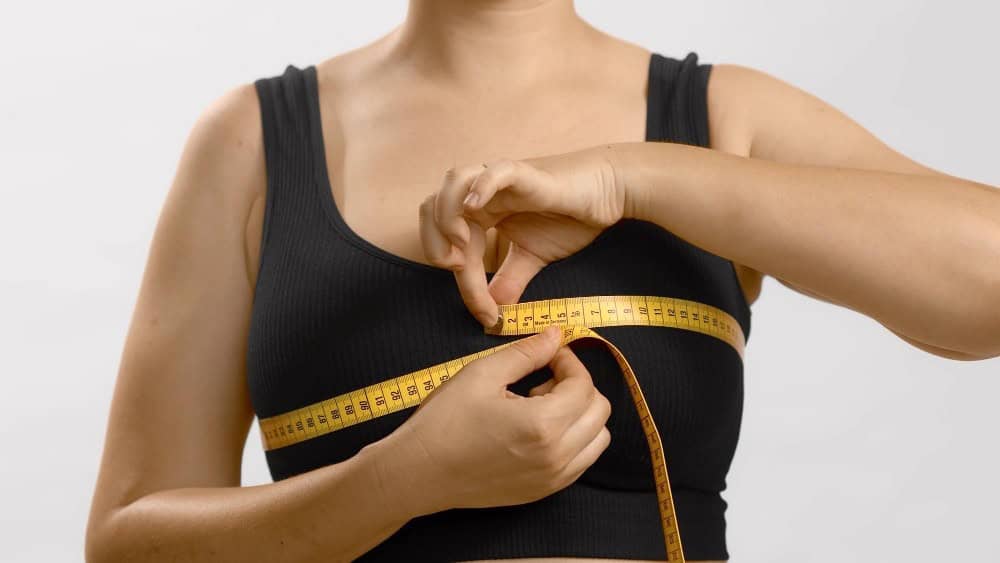
Know what bothers you most. Is it size? Position? Shape? Asymmetry? Being specific helps your surgeon understand your priorities. “I want to go from a B to a D” is a different brief to “I just want them to look like they did before I had children.”
Bring reference photos if you have them. Before-and-after photos of results you find appealing give your surgeon a shared visual language to work from. Be honest about what you’re drawn to — natural and subtle versus full and projected are very different goals that lead to different surgical plans.
Ask your surgeon to explain their recommendation. A good surgeon will tell you which procedure they recommend and why — based on your specific anatomy, not a one-size-fits-all approach. If a surgeon jumps straight to a recommendation without examining you and explaining their reasoning, that’s worth noticing.
Ask about the scars. Ask to see examples of healed scars from the incision pattern your surgeon recommends. This gives you a realistic expectation rather than an abstract one.
Frequently Asked Questions
Can implants lift the breasts without a lift procedure?
Very slightly — and only in cases of minimal ptosis. A larger implant pushes the breast tissue forward and can give a marginal lifting effect. But implants cannot raise the nipple or reposition displaced breast tissue. For any meaningful degree of ptosis, a lift is necessary.
Will I lose nipple sensation after a breast lift?
Temporary changes in nipple sensation are common after any breast surgery. Most patients regain normal sensation within weeks to months. Permanent sensation loss is rare with experienced surgeons using careful technique.
Can I breastfeed after a breast lift or augmentation?
Many women breastfeed successfully after both procedures. However, neither can guarantee preserved breastfeeding ability — this depends on individual anatomy and how much glandular tissue is affected. If breastfeeding future children is a priority, discuss this specifically with your surgeon.
Is it better to wait until after having children?
Pregnancy and breastfeeding after breast surgery can change the results — particularly a lift, as the breast tissue may stretch again. Many surgeons recommend waiting until you’ve completed your family if possible, though this is a personal decision that depends on your age, circumstances, and goals.
How long do breast lift results last?
A lift produces long-lasting results, but the natural ageing process, gravity, and any future pregnancies will continue to affect breast shape over time. Most patients enjoy their results for many years before any significant change occurs.
What if I’m not sure which procedure I need?
This is exactly what a consultation is for. At American Hospital Tirana, we offer video consultations for international patients — your surgeon will assess your photos and anatomy, explain their recommendation, and answer every question you have before you make any decisions or travel plans.
The Bottom Line
If you’re trying to decide between a breast lift and implants, the most honest answer is: it depends on your nipple position, your skin quality, your existing tissue, and your goals — and a qualified surgeon can tell you definitively within a few minutes of examining you.
What you can take from this guide is a clearer understanding of what each procedure actually does, how surgeons think about the decision, and why choosing the right procedure for your anatomy matters far more than choosing the procedure with the simplest recovery or fewest scars.
At American Hospital Tirana, our plastic surgeons give every patient an honest assessment — recommending what will actually achieve the best result, not what is quickest or easiest to perform. Contact us to arrange your consultation, whether in person in Tirana or via video call from home.