Albania has emerged as one of Europe’s most sought-after destinations for medical tourism, and rhinoplasty in Albania is among the most frequently requested procedures. Thousands of patients — including many from the United States, the UK, Italy, and Germany — travel to Tirana each year for high-quality nose reshaping surgery at a fraction of the cost they would pay at home. But before you book your flights, there are essential things every patient should understand to make a safe, well-informed decision.
At American Hospital in Tirana, we’ve guided thousands of international patients through this journey. This guide covers everything from what rhinoplasty actually involves, to how to choose the right surgeon, to what real recovery looks like.
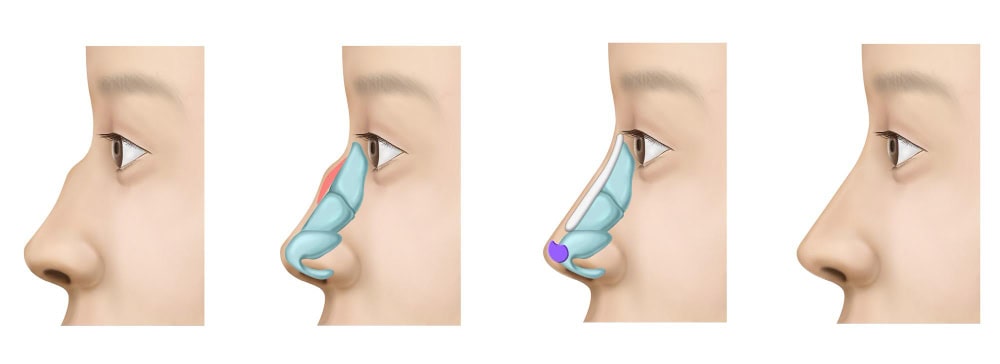
1. Understanding Rhinoplasty: More Than a Cosmetic Change
Rhinoplasty — commonly called a “nose job” — is one of the most complex facial surgeries performed today. It can address aesthetic concerns like a dorsal hump, wide nostrils, or a bulbous tip, but it can also correct functional issues such as a deviated septum that causes difficulty breathing.
Depending on your goals, your surgeon may recommend different approaches. Standard rhinoplasty involves comprehensive reshaping of the nose structure, while nose tip rhinoplasty focuses only on refining the tip and typically comes with a shorter recovery. For patients with both cosmetic and breathing concerns, septorhinoplasty combines aesthetic reshaping with correction of a deviated septum.
Some patients need purely functional intervention — septoplasty improves airflow without changing the nose’s outward appearance. Others may benefit from alar base reduction to narrow the width of the nostrils, or rhinoplasty for men, which is tailored to masculine facial proportions and structure.
During your consultation, your surgeon will help you determine which procedure — or combination — best suits your anatomy and goals. At American Hospital, we use digital imaging to give patients a realistic preview of expected outcomes before committing to surgery.
2. Why Albania? Understanding the Medical Tourism Advantage
One of the most common questions we hear is: “Is it really safe to have surgery abroad?” It’s the right question to ask — and the answer depends entirely on where you go and who performs your procedure.
Albania has invested heavily in its private healthcare sector. Medical tourism in Albania has grown rapidly precisely because facilities like American Hospital Tirana offer Western-standard care at significantly lower prices — without compromising on safety, surgical technique, or post-operative support.
Cost savings of 50–70% compared to the US or UK are typical. But for most patients, the deciding factor isn’t just price — it’s knowing they’ll receive genuine hospital-grade care, not a clinic appointment with limited backup.
3. The Hospital Difference: Why Clinic vs. Hospital Matters
Many rhinoplasty providers abroad operate as standalone aesthetic clinics. These can be perfectly adequate for minor procedures, but for surgical interventions like nose reshaping — which involves anesthesia, bone work, and a structured recovery — operating within a full hospital system matters enormously.
American Hospital’s plastic surgery department is embedded within one of the Balkans’ leading private hospital systems, established in 2006 and trusted by over 400,000 patients. Every rhinoplasty patient benefits from advanced operating theatres with full cardiac monitoring, specialist anesthesiology teams experienced in facial surgery, and immediate ICU access in the rare event it’s ever needed.
Our integrated system also means coordination across more than 30 medical departments, with 24/7 specialist support throughout your recovery. This level of infrastructure doesn’t just improve outcomes — it gives patients and their families genuine peace of mind.
4. What the Consultation Process Should Look Like
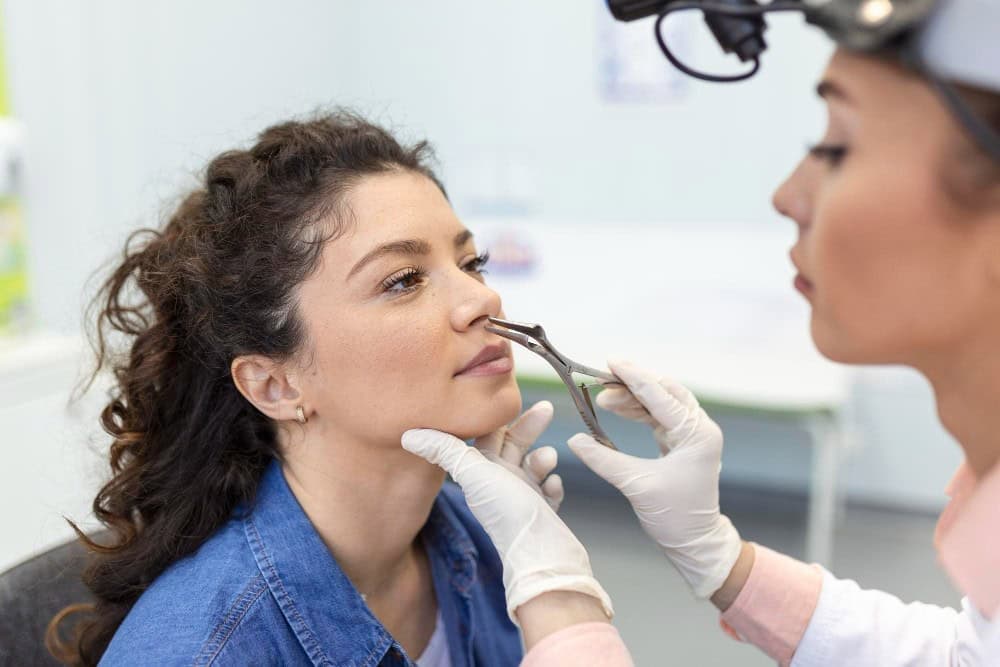
A responsible rhinoplasty consultation is never rushed. Before your surgery date is even discussed, your surgeon should conduct a thorough review of your aesthetic goals and any functional concerns, assess your nasal anatomy, skin thickness, and facial proportions, and use digital imaging or simulation where applicable.
Equally important is an honest conversation about what is and isn’t achievable for your specific anatomy. Not every goal is realistic for every nose, and a surgeon who tells you otherwise is not someone you want holding a scalpel. Pre-operative bloodwork, health screening, and medical clearance should also be standard — not optional.
We offer free initial consultations for international patients, including remote consultations via video call before you travel. You can contact us or reach us via WhatsApp to get started.
5. Preparing for Surgery: What You Need to Do in Advance
Good preparation significantly improves both your surgical experience and your recovery. In the weeks before your procedure, you should stop smoking at least 4–6 weeks in advance, as smoking impairs healing and increases complication risk. Blood-thinning medications and supplements — including aspirin, ibuprofen, fish oil, and vitamin E — should be paused as directed by your surgeon.
Practically speaking, arrange for a companion to travel with you, particularly for the first few days post-surgery. Plan to stay in Tirana for at least 7–10 days after your procedure, and bring any relevant medical records including documentation of previous nose surgeries or breathing evaluations.
Before you travel, confirm that your travel insurance covers medical procedures abroad. Policies vary significantly, and it’s important to have this sorted well in advance rather than at the last minute.
6. What Recovery Actually Looks Like
This is where many patients are underprepared. Rhinoplasty recovery is gradual — and the final result can take 12 months or more to fully emerge as swelling resolves.
In the first week, you’ll have a splint on your nose. Swelling and bruising around the eyes is normal and expected. Rest, elevation, and cold compresses are your most important tools during this phase. By week two, the splint is removed and most patients feel comfortable enough to be seen in public, though swelling continues beneath the surface.
Between weeks three and six, the majority of visible swelling resolves and you can return to light activities and work. From months three to twelve, the nose continues to refine quietly. Final results emerge slowly as deeper swelling subsides — which is why patience is genuinely part of the process.
Our team provides structured recovery protocols and long-term follow-up support. For international patients, we also coordinate with your home physician for continuity of care after you return.
7. Realistic Expectations: The Foundation of a Good Outcome
The best rhinoplasty results come from patients who have realistic, well-defined goals — and surgeons who communicate honestly about what is achievable. A nose job should enhance your natural features and bring your face into better harmony, not fundamentally alter who you are.
We encourage patients to browse our before and after gallery to understand the range of results we achieve. We also recommend exploring our full range of facial surgery procedures, as some patients find that complementary treatments can further enhance overall facial balance alongside rhinoplasty.
A chin augmentation, for example, can dramatically improve how a reshaped nose reads on the face by strengthening the chin’s projection. A lip lift can refine the area below the nose in a way that complements the surgical outcome above it. Your surgeon will discuss whether any of these additions make sense for your specific goals.
8. Common Questions from International Patients
Is it safe to fly after rhinoplasty?
Most surgeons recommend waiting at least 7–10 days before flying. Cabin pressure changes can affect swelling and comfort, and our team will clear you for travel before you depart.
What if something goes wrong after I return home?
Complications from rhinoplasty are rare, but our team remains reachable by video consultation and coordinates with your local medical providers. For anything requiring in-person assessment, we will work with you on next steps.
Will I need revision surgery?
Revision rhinoplasty is sometimes needed when initial results don’t fully meet a patient’s goals, or in rare cases where healing creates asymmetry. Our surgeons are experienced in both primary and revision cases, and we will always discuss this possibility transparently during your consultation.
9. Beyond Rhinoplasty: Other Procedures to Consider
Many patients who travel for rhinoplasty take the opportunity to address additional concerns during the same trip. Our full range of plastic surgery procedures covers facial, body, and breast surgery, all performed within the same hospital infrastructure.
On the facial side, eyelid surgery refreshes tired-looking eyes, otoplasty corrects prominent ears, and buccal fat removal creates sharper facial contours. A brow lift or facelift can address broader facial aging concerns for patients who are ready for more comprehensive rejuvenation.
For patients with body-related goals, we offer a comprehensive range of body surgery options and breast surgery procedures that can be combined with facial work where medically appropriate and timing allows.
Ready to Take the Next Step?
Choosing where to have rhinoplasty is one of the most important decisions you’ll make. At American Hospital Tirana, we combine internationally trained surgeons, full hospital infrastructure, and genuine multilingual patient support to give you an experience that meets the highest standards — at a cost that makes world-class care accessible.
We invite you to book a free consultation, explore our plastic surgery services, or simply reach out with your questions. Our team is here to help you make the best decision for your health, your appearance, and your confidence.