Invisalign vs Braces in Albania: Which Option Is Better?
Choosing Invisalign or braces for adults in Albania is not simply a question of which treatment looks better. Both can straighten teeth and improve bite problems, but they differ considerably in visibility, daily routine, responsibility, and the types of tooth movements they can manage.
At American Dental Hospital in Tirana, the right orthodontic option is selected after evaluating your teeth, bite, gums, lifestyle, and treatment goals. For some adults, clear aligners provide the flexibility they want. For others, fixed braces offer better control.
Why Are More Adults Considering Orthodontic Treatment?
Orthodontic treatment is not limited to children and teenagers.
Adults may consider straightening their teeth because of crowding, gaps, bite problems, teeth that have moved after previous treatment, or simply because they have become more conscious of their smile.
Some patients are also planning veneers or other cosmetic dentistry and first need to improve tooth position. Correcting alignment before restorative treatment can sometimes create a more conservative and balanced final result.
The question then becomes: should you choose Invisalign or braces?
Invisalign vs Braces: What Is the Main Difference?
The main difference is how the two systems move your teeth.
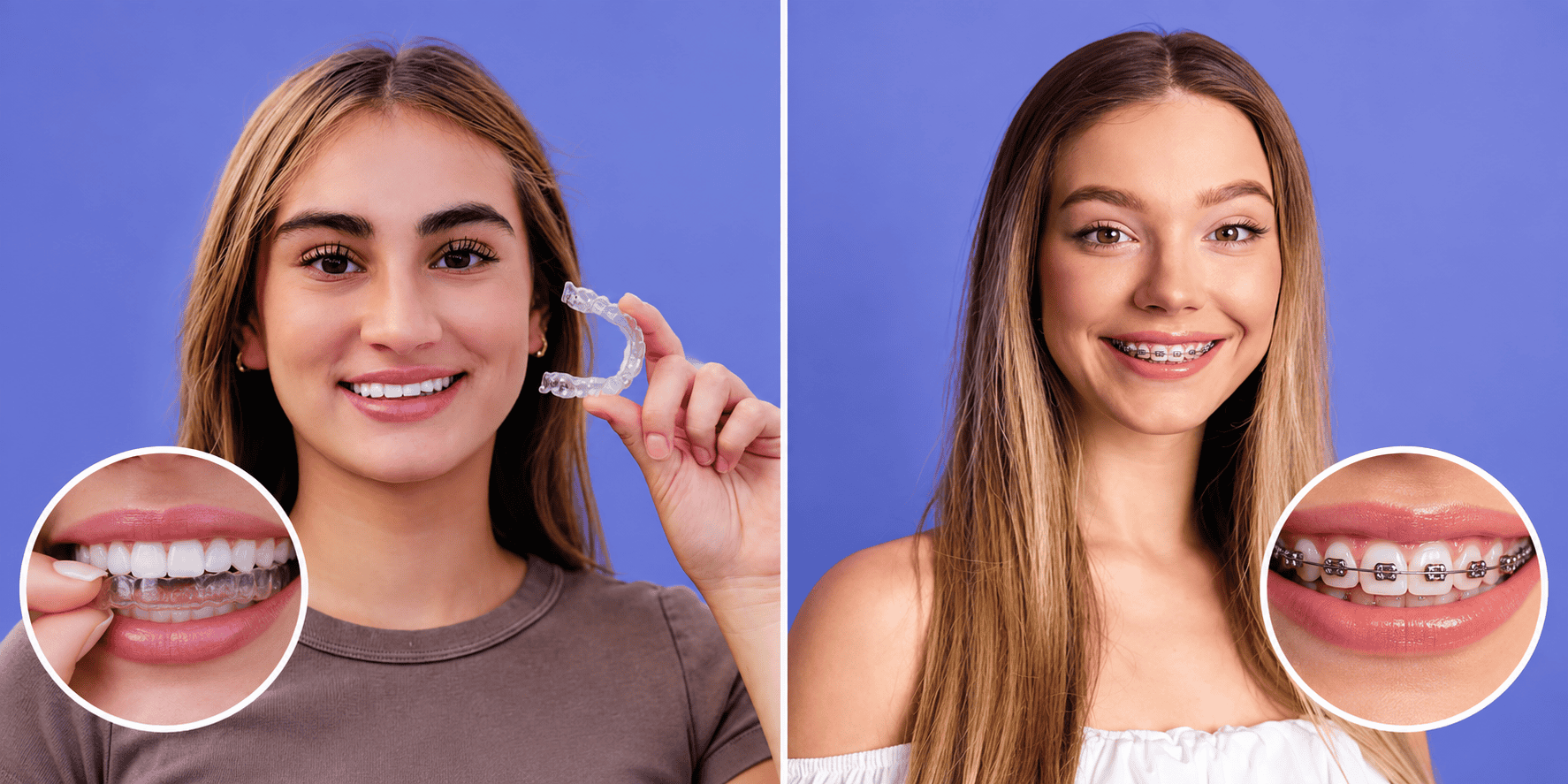
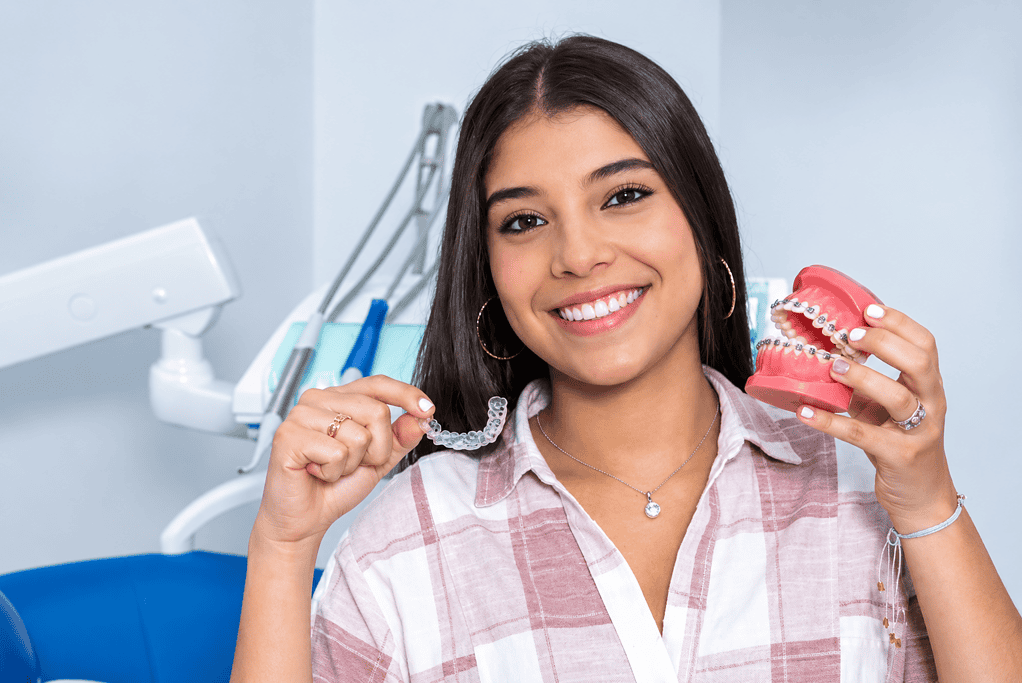
Invisalign uses a sequence of transparent removable aligners. Each aligner is designed to gradually guide the teeth toward their planned positions.
Traditional braces use brackets attached to the teeth and orthodontic wires that apply continuous pressure. Because the appliance remains fixed, it continues working without depending on the patient remembering to wear it.
Neither option is universally better.
The ideal choice depends on factors such as:
- Complexity of the tooth movement
- Bite problems
- Appearance preferences
- Oral hygiene
- Daily habits
- Ability to follow treatment instructions
- Previous dental work
A complete orthodontic assessment is therefore necessary before deciding.
When Can Invisalign Be a Good Option for Adults?
Invisalign is particularly attractive to adults who want orthodontic treatment to interfere as little as possible with their professional or social life.
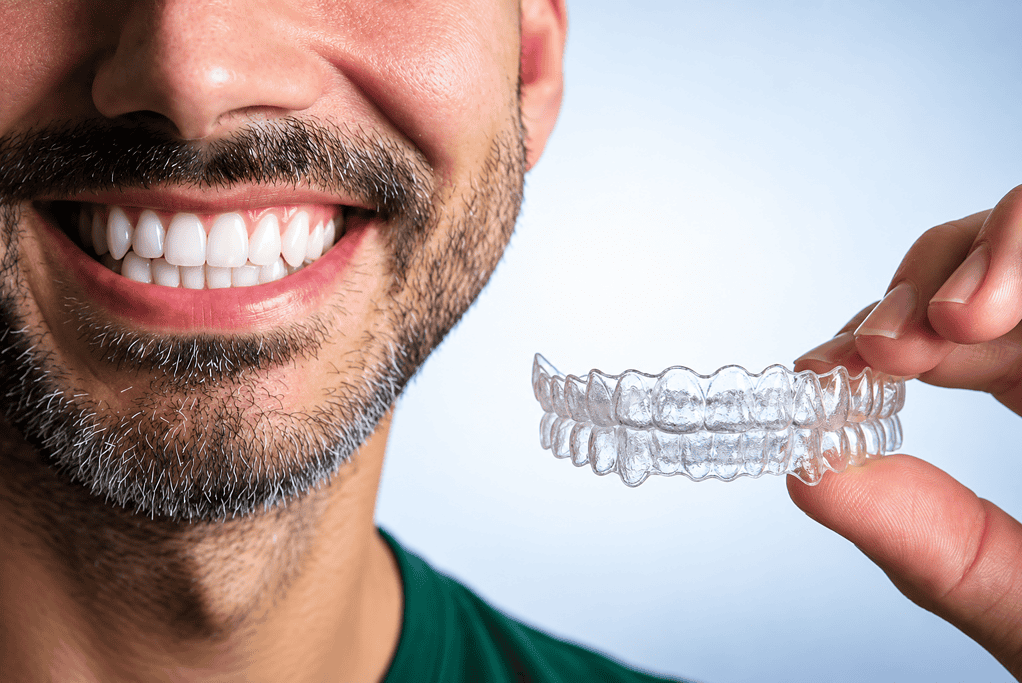
The aligners are transparent and fit closely over the teeth, making them much less noticeable than traditional metal braces.
They may be used for concerns such as mild to moderate crowding, spaces between teeth, and selected bite problems. More complex movements may also be possible in certain patients, but suitability must be determined individually.
One of the biggest advantages is removability. Aligners are taken out when eating and when brushing or flossing, which can make everyday oral hygiene easier.
However, this convenience also comes with responsibility.
American Dental Hospital recommends wearing Invisalign aligners for approximately 20–22 hours per day. Patients who frequently leave them out may slow down treatment or compromise the planned result.
Patients who want to understand the system in greater detail can explore Invisalign treatment in Albania.
When May Traditional Braces Be the Better Choice?
Braces remain an important orthodontic treatment even with the growing popularity of clear aligners.
Because brackets and wires remain fixed to the teeth, they allow the orthodontist to maintain continuous control over tooth movement. This can be particularly useful when the case involves more complicated rotations, significant crowding, or difficult bite correction.
Braces also remove one major variable: patient compliance.
You cannot forget to wear them.
This can make fixed treatment more appropriate for someone who knows that consistently wearing removable aligners for most of the day would be difficult.
American Dental Hospital offers traditional metal braces as well as other fixed orthodontic options depending on the patient’s needs.
Which One Is More Discreet?
For most adults, Invisalignis the best choice when it comes to visibility.
The aligners are transparent, making them difficult to notice during normal conversation and photographs. This can be particularly important for people working in client-facing roles or those who simply prefer not to have visible orthodontic appliances.
But Invisalign is not the only less-visible alternative.
Clear ceramic braces use tooth-colored or transparent brackets while maintaining a fixed bracket-and-wire system. American Dental Hospital also offers lingual braces, which are positioned on the inside surface of the teeth.
This means an adult who is not a good candidate for Invisalign may still have alternatives to traditional visible metal braces.
Invisalign vs Braces for Eating
Daily eating habits are quite different with the two treatments.
With Invisalign, the aligners should be removed before eating. Because there are no brackets attached to the teeth, patients can generally continue eating their usual foods once the aligners have been removed.
The teeth should be cleaned before the aligners are put back into place.
Braces remain fixed while eating, which means certain hard, sticky, or chewy foods may need to be limited because they can damage brackets or wires.
For someone who wants fewer food restrictions, removable aligners may therefore feel more convenient.
Which Is Easier to Keep Clean?
Oral hygiene is another important consideration.
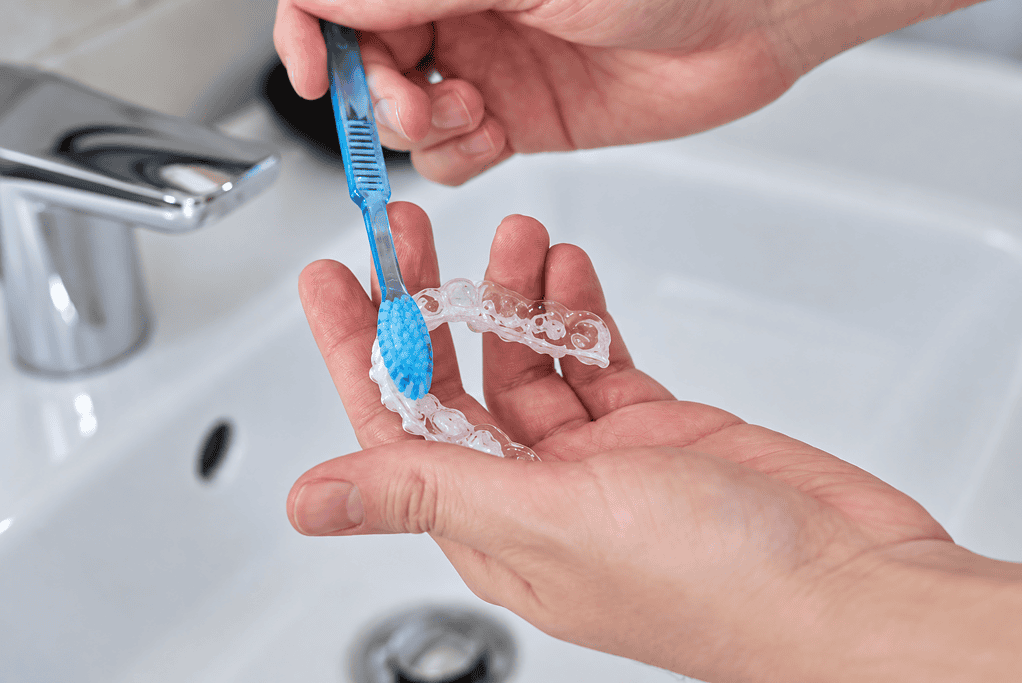
Invisalign aligners can be removed, allowing patients to brush and floss their natural teeth normally. The aligners themselves also need to be cleaned correctly.
Braces require more attention because food and plaque can collect around brackets and underneath wires. Patients need to clean carefully around every component to protect the gums and enamel throughout treatment.
This does not mean braces cause poor oral hygiene. It simply means that maintaining good hygiene usually requires more effort.
Patients with existing gum problems should have their periodontal health evaluated before beginning either type of orthodontic treatment.
Is Invisalign More Comfortable Than Braces?
Both Invisalign and braces can produce temporary pressure or soreness because both treatments work by moving teeth.
Invisalign aligners have smooth plastic surfaces and do not have metal brackets or wires. Some adults therefore find them easier to adapt to.
Traditional braces may initially cause irritation where brackets contact the lips or cheeks, particularly during the first few days after placement or adjustment.
However, discomfort with either treatment is usually associated with tooth movement and tends to be temporary.
Comfort alone should not determine the treatment if another system provides better control for the orthodontic problem being corrected.
How Long Does Invisalign or Braces Treatment Take?
There is no reliable rule that Invisalign is always faster than braces or vice versa.
Treatment time depends primarily on what needs to be corrected.
A relatively minor alignment problem may be treated faster than severe crowding or a complicated bite regardless of the appliance used.
American Dental Hospital states that Invisalign treatment may commonly fall within approximately 6–18 months, while its general orthodontic guidance places traditional braces around 18–24 months in typical cases. These are general ranges rather than guarantees, and individual treatment can be shorter or longer.
Missed appointments, broken orthodontic appliances, or failing to wear aligners correctly can also extend treatment.
What If You Already Have Crowns, Veneers or Implants?
Having previous dental work does not automatically prevent orthodontic treatment.
Crowns and other restorations can often be incorporated into an orthodontic plan. Dental implants, however, behave differently because an integrated implant does not move through the bone like a natural tooth.
This means the orthodontist must consider the position of existing implants and restorations during treatment planning.
For adults planning a larger smile transformation, this is particularly important. Orthodontics, restorative dentistry, and implant treatment should ideally be planned together rather than as unrelated procedures.
Do You Need Retainers After Invisalign or Braces?
Yes.
Finishing active orthodontic treatment does not mean the teeth will automatically remain in their new positions forever.
Teeth can gradually shift, which is why retainers are an important final stage after both Invisalign and braces. The orthodontist will provide instructions about how often the retainers should be worn.
Ignoring retention can allow some of the original crowding or spacing to return.
Invisalign or Braces: Which Is Better for You?
A simple comparison can help identify your priorities:
| Factor | Invisalign | Braces |
| Visibility | Very low | More visible |
| Removable | Yes | No |
| Food restrictions | Minimal when removed | Some restrictions |
| Oral hygiene | Generally easier | Requires more care |
| Patient discipline | Very important | Less dependent on compliance |
| Complex tooth movement | Case dependent | Strong control in complex cases |
| Daily flexibility | High | Appliance remains fixed |
This table should not replace an orthodontic assessment.
A patient may strongly prefer Invisalign but have a bite problem that is better managed with fixed treatment. Another patient may be an excellent Invisalign candidate and value the additional flexibility that removable aligners provide.
The best orthodontic treatment is therefore the one that can safely and predictably correct your specific problem.
Why Choose American Dental Hospital for Orthodontics in Albania?
American Dental Hospital offers several orthodontic options rather than directing every patient toward the same system.
Patients can be evaluated for:
- Invisalign
- Traditional metal braces
- Clear ceramic braces
- Lingual braces
- Adult orthodontics
- More complex bite correction
Its broader dental setting also allows orthodontic planning to consider gum health, existing restorations, implants, cosmetic treatment, and surgical needs when relevant. American Dental Hospital states that complex jaw cases can also be coordinated with oral and maxillofacial specialists.
For adults in particular, this can be valuable when straightening the teeth forms only one part of a larger dental treatment plan.
Frequently Asked Questions
Is Invisalign as Effective as Braces?
For many suitable cases, Invisalign can effectively straighten teeth and correct selected bite problems. More complex tooth movements may be better managed with braces, although suitability depends on the individual case.
Is Invisalign Better for Adults?
Many adults prefer Invisalign because it is less visible, removable, and easier to integrate into work and social situations. That does not necessarily make it the best clinical option for every adult.
Can Adults Get Traditional Braces?
Yes. There is no requirement that braces be used only during childhood or adolescence. Adults with healthy teeth and gums can receive fixed orthodontic treatment when appropriate.
Can I Remove Invisalign for an Important Event?
Aligners can be temporarily removed, but they need to be worn consistently for treatment to remain on schedule. Frequent or extended removal can affect progress.
Which Option Is Better for a Complex Bite?
Traditional fixed braces can provide strong control for complex movements, although some complex cases can also be treated with clear aligners. The decision requires a full examination of the teeth and bite.
Will I Need a Retainer?
Yes. Retainers are important after both Invisalign and braces to help maintain the corrected tooth positions.
Find the Right Orthodontic Treatment at American Dental Hospital
The choice between Invisalign and braces should not be made on appearance alone. Your bite, tooth position, oral health, lifestyle, and ability to follow treatment instructions all influence which system may work better for you.
At American Dental Hospital in Tirana, adults can be evaluated for Invisalign as well as traditional, ceramic, and lingual braces before a personalized orthodontic plan is recommended.
- 😁 Invisalign and fixed orthodontic options
- 🦷 Personalized bite and alignment assessment
- 📱 Digital orthodontic treatment planning
- 🏥 Multidisciplinary dental care in a private hospital environment
- ✈️ Support for international patients
- 📲 Call or WhatsApp: +355 68 808 0805
- 📧 Email: [email protected]
Contact American Dental Hospital to schedule an orthodontic assessment and discover which treatment best matches your teeth, bite, and lifestyle.
Get Your Free Dental Quote
Speak with an experienced dentist in Albania and receive a personalized treatment recommendation. We offer free evaluations for all dental treatments, with transparent pricing and expert guidance at every step.
Start your transformation today!
Send your details for a FREE CONSULTATION!
Blogs & Articles
Latest Articles
Get expert dental care tips and clinic updates—all designed to keep your smile healthy and bright.
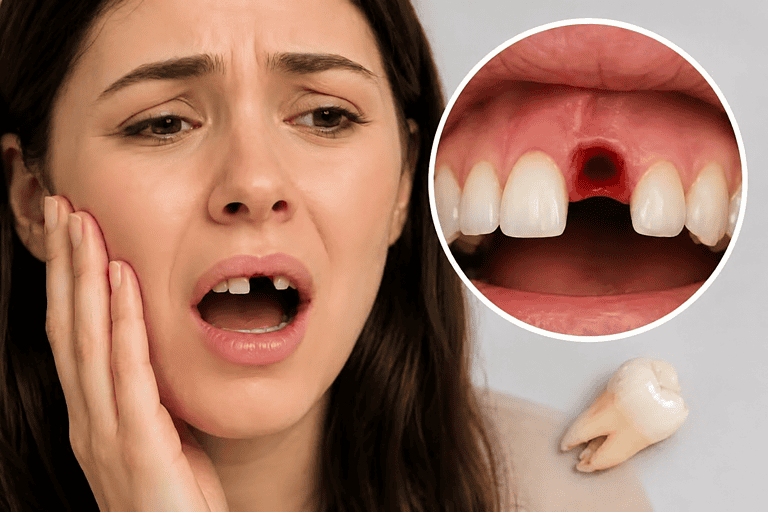
Knocked-Out Adult Tooth: Why Fast Dental Care Matters
A knocked-out adult tooth is a dental emergency, and acting quickly may help save it.
Read More
Baby Tooth Cavities: Why They Still Need Treatment
Baby tooth cavities might seem less important because those teeth will eventually fall out. However,
Read More
Teeth Whitening vs Veneers: Which Treats Stained Teeth?
Not all tooth stains need the same treatment. Teeth whitening can lighten natural teeth, while
Read More
Simple 1 minute consultation request for our experts
Request Your Free Quote
Start your transformation today!
Send your details for a FREE CONSULTATION!