


All-on-6 vs All-on-8 in Albania: 7 Critical Differences
All-on-6 vs All-on-8 in Albania is an important comparison for patients considering fixed full-arch dental implants. Both treatments can restore an entire upper or lower arch of missing teeth, but does placing eight implants instead of six guarantee stronger, longer-lasting fixed teeth? No. The number of implants alone does not determine the outcome. Jawbone quality, implant positioning, bite forces, oral health and the design of the final prosthesis all affect treatment planning. At American Dental Hospital in Tirana, the decision begins with a clinical assessment rather than a preference for the highest implant count.
1. All-on-6 vs All-on-8: What Do They Replace?
Both All-on-6 and All-on-8 use dental implants placed in the jawbone to support a complete fixed arch of replacement teeth. Unlike a conventional removable denture, the prosthesis is secured to the implants and is not taken out by the patient every night. These treatments are intended for patients who need a complete upper- or lower-arch rehabilitation, but their suitability depends on an individualized examination.
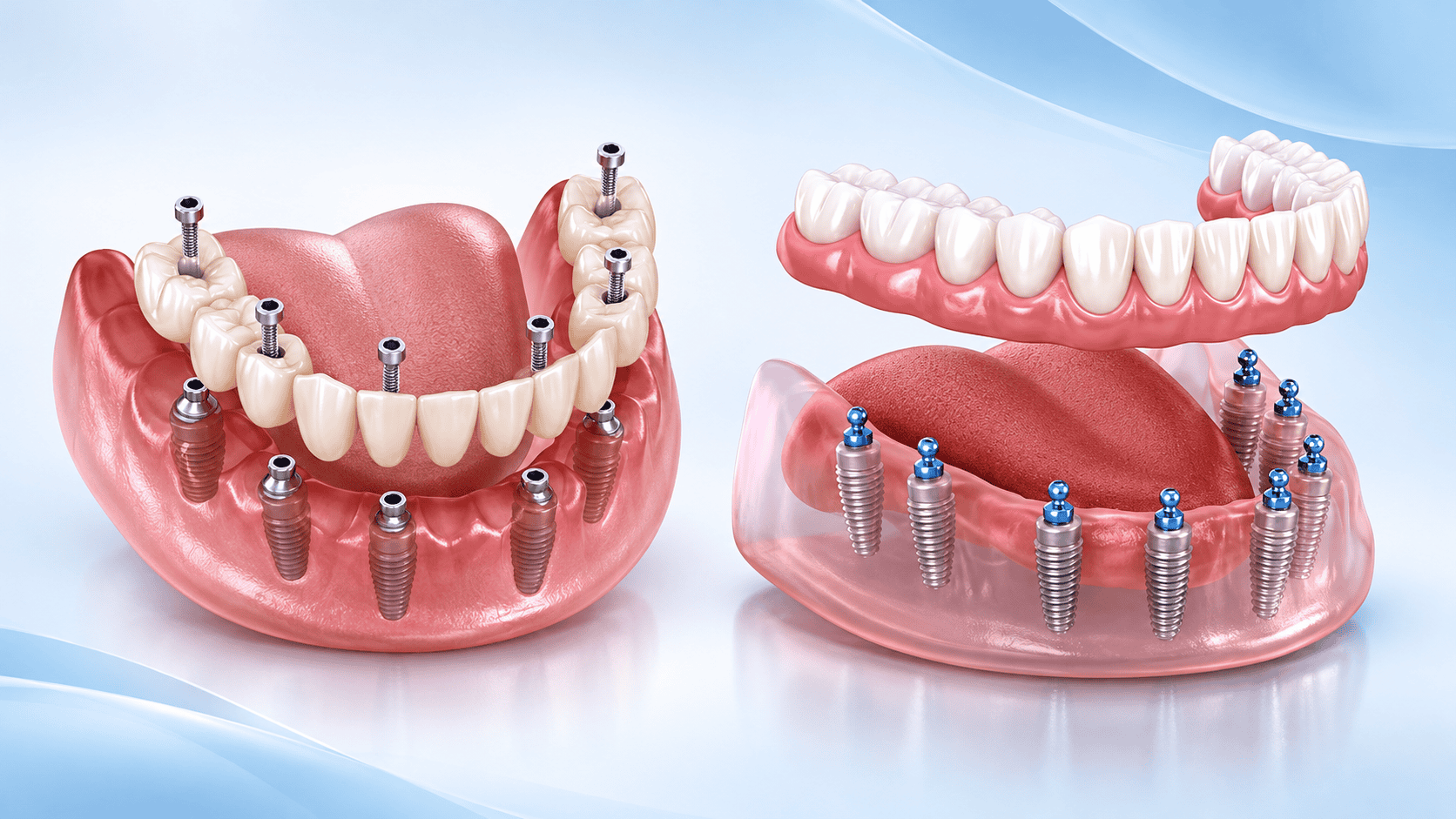
All-on-6 uses six strategically planned implants per arch; All-on-8 uses eight. These names describe the supporting implants, not how many visible teeth will appear in the final prosthesis. More implants may create additional support points in selected cases, but useful positioning and sound restorative design matter more than the number alone.
Our hospital provides both All-on-6 dental implants and All-on-8 dental implants. Neither configuration can be recommended responsibly without clinical examination and three-dimensional imaging.
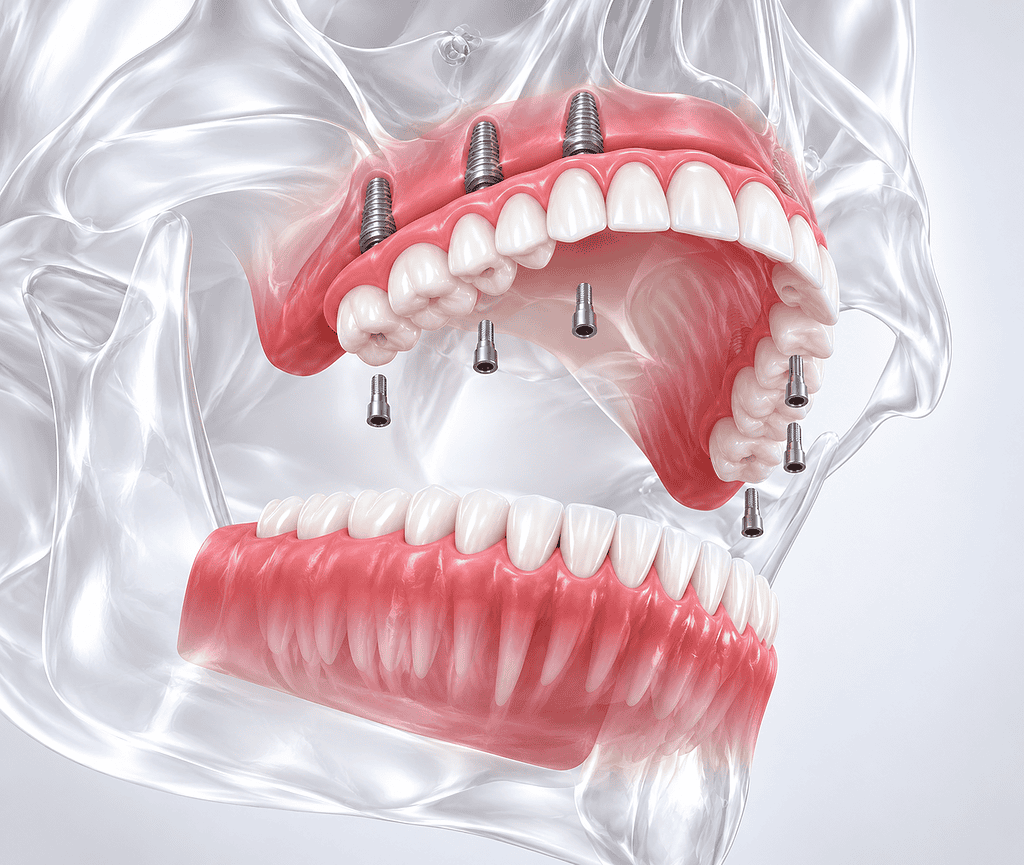
All-on-6 vs All-on-8: Comparison at a Glance
| Decision Factor | All-on-6 | All-on-8 |
| Implants per jaw | Six | Eight |
| Main purpose | Support one fixed full arch | Support one fixed full arch |
| Bone availability | Suitable sites for six implants | Suitable sites for eight implants |
| Surgery | Six placement sites | Eight placement sites |
| Prosthetic support | Planned across six positions | Planned across eight positions |
| Main consideration | Sufficient support and distribution | Whether extra positions add value |
| Final teeth | Customized fixed prosthesis | Customized fixed prosthesis |
This All-on-6 vs All-on-8 comparison highlights the differences between two possible full-arch treatment configurations. It does not predict individual results: six well-positioned implants can sometimes provide suitable support, while eight implants may offer extra planning flexibility when the jawbone and prosthetic design justify them. Neither approach guarantees a complication-free or permanent result.
2. When Is All-on-6 a Sensible Choice?
In an All-on-6 vs All-on-8 assessment, six implants may be a sensible option when they can be placed in well-distributed positions with adequate bone support. The clinical team assesses implant spacing, angulation and the forces that the finished bridge must withstand. A restoration supported by six strategically placed implants may be entirely appropriate without adding two more surgical sites.
All-on-6 may also be considered when posterior jaw anatomy limits the safe placement of additional implants, or when two more implants would increase surgical complexity without a clear restorative advantage. The choice must still account for the upper or lower jaw, the patient’s bite, the proposed prosthetic materials and any history of grinding or clenching.
Potential advantages include:
- Support for a complete fixed restoration with six implants.
- Fewer surgical sites than an eight-implant configuration.
- Flexibility in selected upper- and lower-jaw cases.
- A prosthetic design tailored to the patient’s bite and facial proportions.
The key limitation is that the planned six implant locations must be suitable for the intended prosthesis. Our earlier All-on-4 vs All-on-6 comparison provides additional context on why implant numbers vary across full-arch treatment plans.
3. When Can All-on-8 Offer Additional Support?
All-on-8 may be considered when adequate bone is available at eight useful positions and the final prosthetic design can benefit from the additional support points. Depending on the patient’s anatomy and functional requirements, these extra positions may give the restorative team more planning options. However, the proposed advantage needs to be demonstrated in the individual treatment plan, not assumed from the number eight.
In the All-on-6 vs All-on-8 comparison, the eight-implant configuration requires two additional placement sites in the same jaw. Each proposed location must respect nerves, sinus anatomy, bone dimensions and appropriate spacing. More surgical sites can add complexity, so an eight-implant plan should clearly explain what the extra implants contribute to the final fixed restoration.
Choosing more implants should be the result of clinical and restorative planning, not a marketing upgrade. The most suitable configuration is the one that achieves stable, maintainable fixed teeth while respecting the patient’s anatomy and minimizing unnecessary intervention.
4. Does All-on-8 Have a Higher Success Rate?
When evaluating All-on-6 vs All-on-8, there is no reliable basis for promising that eight dental implants always survive longer or perform better than six. Evidence on fixed full-arch restorations highlights many factors that contribute to success, and implant count alone does not establish a universally superior approach. Patients should be cautious of any claim that All-on-8 automatically prevents implant failure or prosthetic complications.
Long-term results depend on:
- Bone quality and the amount of supporting bone.
- Implant position, stability, and surgical planning.
- The design and fit of the fixed prosthesis.
- Smoking, general health, and gum inflammation.
- Bruxism, bite forces, and daily cleaning.
- Maintenance appointments and management of complications.
Additional implants do not eliminate biological or mechanical risks. Inflammation around implants, loss of supporting bone, loose components, fractures and wear of the restoration may still occur. Long-term outcomes depend on sensible treatment planning, healthy daily habits and professional maintenance, whether the restoration uses six or eight implants.
5. How Does Jawbone Quality Affect Implant Choice?
After teeth are lost, the surrounding jawbone may gradually lose height and width, especially when teeth have been missing for many years. The upper jaw may have different bone density and sinus-related limitations from the lower jaw, where important nerves affect safe implant positioning. As a result, the best implant arrangement can differ between jaws in the same patient.
At American Dental Hospital, digital diagnostics and 3D imaging help assess bone volume, density, implant positions and nearby anatomical structures. This evaluation guides whether six, eight or another number of implants should be considered. Neither All-on-6 nor All-on-8 can be selected responsibly on the basis of photographs or an online estimate alone.
Some patients require bone grafting or advanced implant planning before a fixed restoration is possible. For a broader explanation of individual treatment decisions, see our article on full-mouth dental implants after years of dental problems.
6. Surgery, Recovery and Temporary Fixed Teeth
Full-arch rehabilitation begins with a detailed assessment of the remaining teeth, gums, medical history, jawbone and bite. The team decides whether any teeth need to be extracted, whether bone grafting or other preparation is required, and how the prosthesis will attach to the implants. All-on-8 involves two more implant placement sites than All-on-6, but the actual surgical difficulty and recovery depend on the full treatment plan.
Implants are then placed according to the agreed surgical plan. Some patients qualify for immediate loading, meaning a temporary fixed prosthesis can be fitted soon after surgery if initial stability is sufficient.
Temporary fixed teeth are not the same as the final prosthesis. When immediate loading is appropriate, a provisional bridge may be attached soon after surgery, but this depends on sufficient initial implant stability and other clinical criteria. The implants then need time to integrate with the jawbone. Once healing is assessed, the definitive prosthesis is designed, fitted and adjusted for the patient’s bite, function and appearance. Healing is individual, and neither procedure guarantees immediate fixed teeth.
7. Treatment Planning and Trips to Albania
A clear All-on-6 vs All-on-8 treatment proposal should identify which jaw is being restored, why the suggested implant positions are appropriate, whether extractions or grafting are expected, and how the final fixed bridge will be supported. It should also explain temporary teeth, healing stages, hygiene requirements and follow-up care. For patients traveling from Italy or elsewhere, understanding the number and purpose of planned visits is particularly important.
Our published guide to how many days and trips dental implants require explains why full-arch cases are commonly arranged across separate visits. The exact schedule depends on healing, additional procedures, and the final prosthetic work.
Before booking travel, ask about the expected time between surgical and restorative visits, the possibility of temporary fixed teeth, dietary advice, postoperative checks and what happens if healing requires additional time. An online assessment can help with initial planning, but the definitive choice between six and eight implants requires in-person clinical findings and appropriate imaging.
Frequently Asked Questions About All-on-6 vs All-on-8
Can All-on-6 and All-on-8 Both Restore My Upper Teeth?
Yes, either may support a complete upper-arch restoration in a suitable patient. The choice depends on available bone, implant distribution, and the planned prosthesis.
Is All-on-8 Automatically Better for Strong Chewing Forces?
No, because the overall design and implant positions matter as much as their number. Your dentist must consider bite pressure and the ability of the restoration to distribute it.
Can I Choose All-on-8 Just for Peace of Mind?
You can discuss a preference for eight implants during consultation, but additional implants should only be recommended when the anatomy and prosthetic plan justify them. A greater implant count is not an independent guarantee of stronger or longer-lasting fixed teeth.
Can I Receive Temporary Fixed Teeth Immediately After Surgery?
Some patients qualify for a temporary fixed prosthesis shortly after placement, sometimes through immediate loading. This depends on implant stability, bone conditions and other clinical factors, and should not be promised before examination.
Does the Final Prosthesis Need Special Cleaning?
Yes, fixed full-arch teeth require careful cleaning beneath the prosthesis and around the implants. Regular professional reviews over the years help detect inflammation, loosening, or excessive wear.
Are Eight Dental Implants Stronger Than Six?
Not automatically. Eight implants provide more potential support points, but overall stability depends on bone support, implant distribution, bite forces and the prosthetic design. Six appropriately planned implants may provide suitable support for a complete fixed arch.
How Long Do All-on-6 and All-on-8 Dental Implants Last?
Both configurations are designed for long-term function, but no fixed lifespan can be promised. Daily oral hygiene, general health, regular dental maintenance and management of mechanical problems influence how well implants and the prosthesis perform over time.
All-on-6 or All-on-8 in Albania? Plan Around Your Bone and Bite
When comparing All-on-6 vs All-on-8 in Albania, the right question is not simply which option uses more implants, but which design suits your jawbone, bite and future fixed teeth. American Dental Hospital can assess your clinical condition, explain the proposed implant positions and prosthesis, and help you plan the stages of treatment before travelling. Ask for a personalized full-arch consultation to understand whether six or eight implants are appropriate for you.
- 📧 Email: dental@spitaliamerikan.com
- 📞 Phone: +355 68 808 0805
- 📍 Location: Rruga Sabaudin Gabrani Nr. 2, Tirana, Albania
- 🌐 Contact: Discuss Your Full-Arch Options
Get Your Free Dental Quote
Speak with an experienced dentist in Albania and receive a personalized treatment recommendation. We offer free evaluations for all dental treatments, with transparent pricing and expert guidance at every step.
Start your transformation today!
Send your details for a FREE CONSULTATION!
Blogs & Articles
Latest Articles
Get expert dental care tips and clinic updates—all designed to keep your smile healthy and bright.
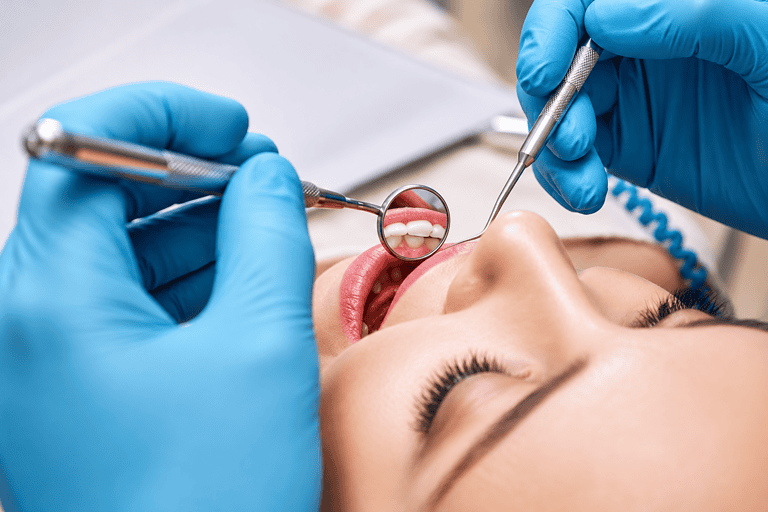
Dental Treatment Plan in Albania: 8 Best Proven Steps
A dental treatment plan in Albania should explain the goals of your care, which appointments
Read More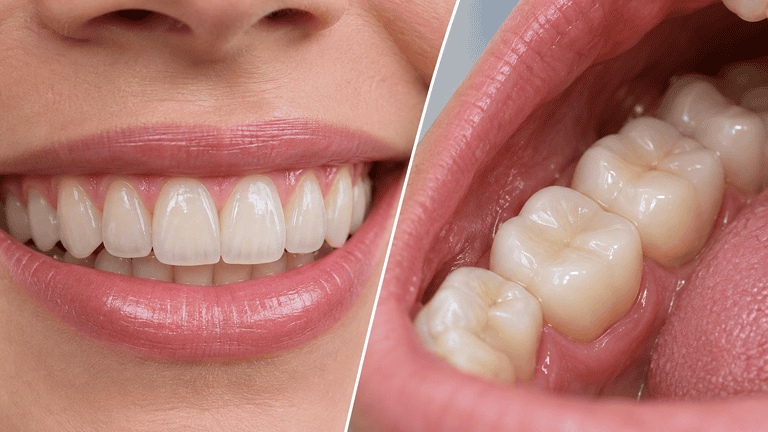
Zirconia vs E-Max Crowns: 7 Essential Tips for a Better Smile
Zirconia vs E-Max crowns in Albania is an important comparison when choosing a ceramic restoration
Read More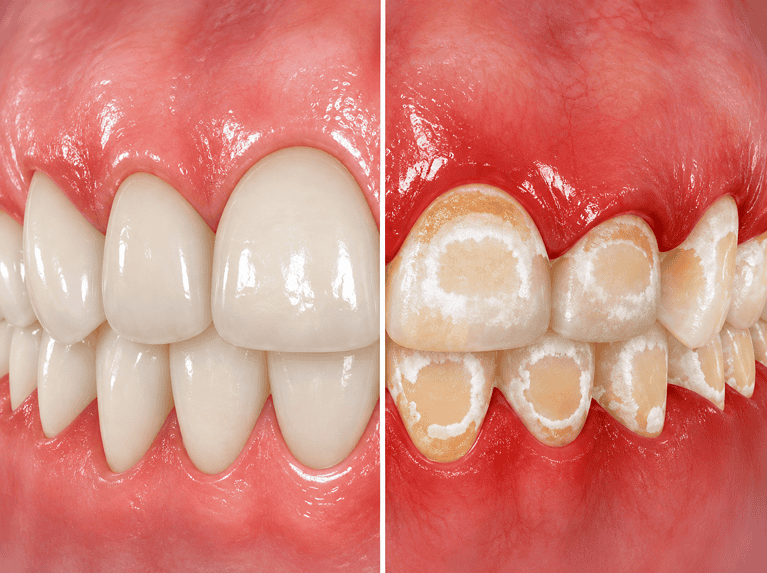
White Spots After Braces: 7 Best Tips for ICON vs Teeth Whitening in Albania
White spots after braces can remain visible once orthodontic brackets are removed, even when the
Read More
Simple 1 minute consultation request for our experts
Request Your Free Quote
Start your transformation today!
Send your details for a FREE CONSULTATION!