There is no single ideal age for a facelift. Most patients consider facial lifting procedures in their 40s to 60s, but the decision should be based on skin laxity, loss of jawline definition and the condition of the neck, rather than chronological age alone.

What Is a Facelift?
A facelift, also known as facial lifting surgery or rhytidectomy, is a surgical procedure that treats visible signs of ageing in the lower face and neck.
The procedure can reposition facial tissues, improve jawline definition and reduce sagging skin. It can also address deeper folds and the downward movement of tissues around the cheeks and mouth.
A facelift is not intended to change a person’s facial features or make them look like someone else. Its goal is to create a fresher appearance while preserving natural characteristics.
What Is the Best Age for a Facelift?
There is no exact age at which everyone should have a facelift. Anatomy, genetics, skin elasticity and the way the face ages vary from one patient to another.
Historically, many candidates have considered the procedure in their late 40s or later. Some people develop visible sagging earlier, while others may not need surgery until their 50s, 60s or beyond.
Cleveland Clinic describes the typical candidate group as people in their 40s to 60s who have signs of ageing but still retain some degree of skin elasticity. However, younger and older patients may also be suitable candidates.
Is a Facelift Suitable After the Age of 40?
Your 40s may be an appropriate time to seek a consultation if jawline definition is beginning to fade, sagging appears in the lower face or the skin of the neck becomes looser.
At this age, the changes may be more limited and the patient may not need the same degree of correction as someone with more advanced ageing.
However, fine lines or minor changes in skin quality are not always reasons to have a facelift. The surgeon should determine whether the concern is caused by the skin, deeper tissues, volume loss or a combination of these factors.
A facelift performed at a younger age should not be based on pressure from trends or a desire to prevent every natural change. There should be anatomical signs that the procedure can reasonably improve.
Are the Ages of 50 to 60 the Most Common Time?
Many people consider a facelift during their 50s and early 60s. During this period, sagging around the jawline, lower face and neck may become more noticeable.
Cleveland Clinic reports that the average age of patients seeking a facelift is often from the late 50s to the early 60s. This does not mean it is the required age, but it is a period when many patients begin to notice changes that are not effectively corrected by surface treatments.
At this stage, there may be a combination of loose skin, displaced fat and weakened supporting structures. A facelift can address these changes more comprehensively than treatments that focus only on the skin’s surface.
Can You Have a Facelift After the Age of 65?
Being over 65 does not automatically exclude a patient from having a facelift. General health and the ability to heal are more important than the number of years a person has lived.
According to the American Society of Plastic Surgeons, patients over the age of 65 can undergo plastic surgery without necessarily having more complications than younger patients, provided they are carefully selected and treated by qualified surgeons.
Before surgery, the heart, lungs, blood pressure, medications and any conditions that may affect anaesthesia or wound healing should be assessed.
Older patients may need more detailed testing and a more carefully planned recovery, but age itself is not an absolute limit.

What Are the Signs That You May Be Ready for a Facelift?
One of the main signs is the loss of a clear jawline. Tissues may descend and create jowling on either side of the chin.
Loose neck skin and vertical bands of the platysma muscle may also affect facial contours. In some cases, a facelift is combined with a neck lift to create a more balanced result.
Deeper folds near the nose and mouth, sagging cheeks and loss of contour in the lower face are also changes that can be assessed during a consultation.
Another sign is that non-surgical treatments no longer address the main concern. When the problem is sagging skin and tissues, adding more volume may not create the desired result.
What Does a Facelift Not Correct?
A facelift is not the main treatment for very fine lines, sun spots, enlarged pores or changes in skin texture.
Treatments such as laser therapy can improve fine lines, pigmentation and surface quality, but they cannot significantly correct sagging skin.
A facelift also does not directly treat drooping eyelids or bags under the eyes. Blepharoplasty may be considered for these concerns and is sometimes performed together with a facelift.
The cause of each change should be identified during the consultation. A single treatment cannot correct every sign of ageing.
Facelift or Non-Surgical Treatments?
Non-surgical treatments may be suitable for mild volume loss, limited wrinkles or changes in the surface of the skin.
They can create gradual improvements, but they generally do not provide the same degree of correction when the skin and deeper tissues have descended significantly.
A thread lift may be considered by some people with early signs of ageing who do not need a major change. Its result and duration are not the same as those of a surgical facelift.
The choice should be based on the problem you want to address, rather than only on the desire to avoid surgery.
Mini Facelift or Full Facelift?
A mini facelift may be used when sagging is more limited and mainly affects the lower face.
A more extensive facelift may be more suitable when there are moderate or advanced changes, including cheek descent, jowling and changes in the neck.
The name of the technique should not be selected according to age alone. One 45-year-old patient may require a different degree of correction from another patient of the same age.
The surgeon should assess the deeper tissues, skin quality and the areas that affect facial balance before recommending a technique.
How Long Do Facelift Results Last?
A facelift does not stop the natural ageing process. The face continues to change over the years, but it generally maintains a fresher appearance than it would have without surgery.
The duration of the result depends on the technique, tissue quality, genetics, sun exposure, smoking and changes in weight.
According to a review published by the American Society of Plastic Surgeons in 2026, the results of some modern techniques may last approximately 10 to 15 years, although individual outcomes vary.
Sun protection, avoiding smoking and maintaining a stable weight may help preserve the result.
Who Is a Suitable Candidate?
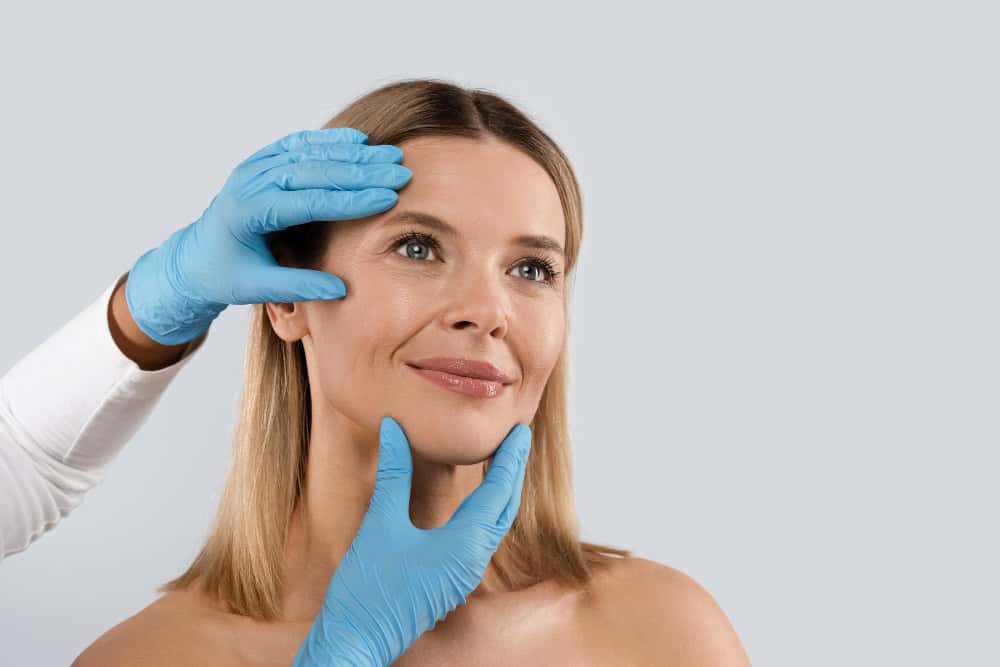
Suitable candidates are generally people in good health without uncontrolled conditions that could interfere with healing.
Not smoking and having realistic expectations are also important. The American Society of Plastic Surgeons emphasises that a facelift should be a personal decision, rather than an attempt to meet someone else’s wishes or an imposed ideal.
The consultation should include a discussion of medical history, medications, previous operations and any cosmetic treatments performed on the face.
The surgeon should explain what can be improved, where the incisions will be placed and what recovery you should expect.
Facelift Surgery at American Plastic Surgery
American Plastic Surgery offers facelift procedures and other facial surgery treatments within American Hospital in Tirana.
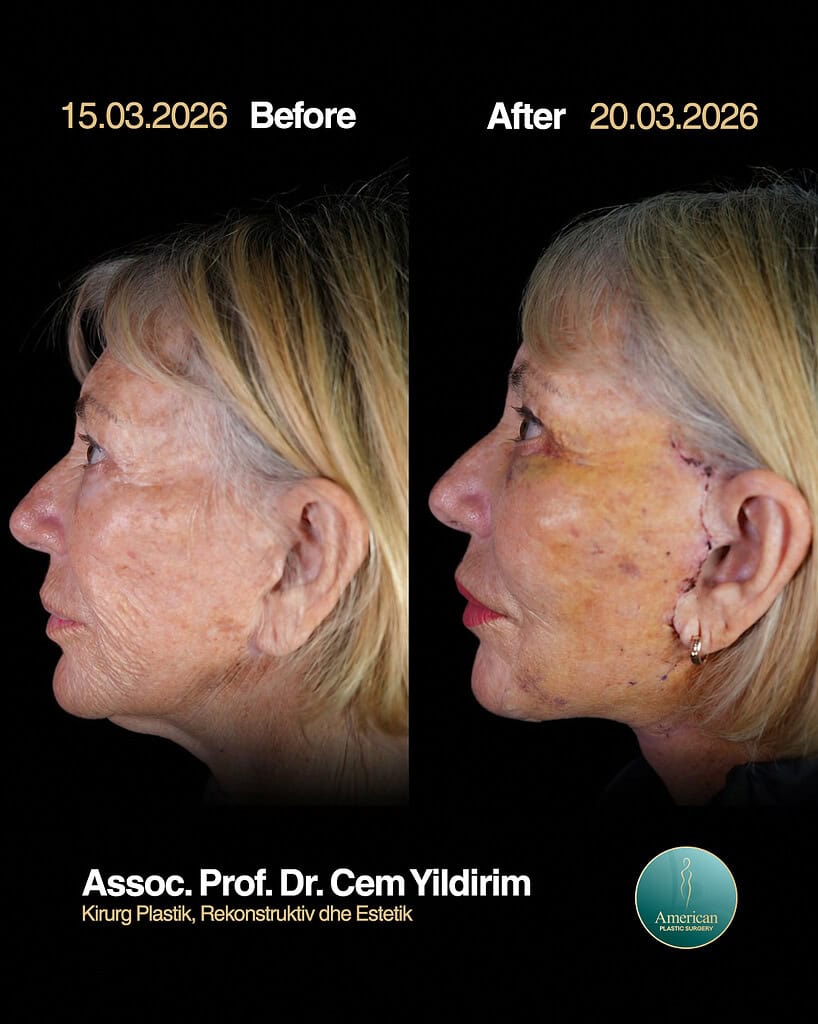
The consultation includes an assessment of the face, jawline, neck and skin quality. The technique is selected according to the patient’s anatomy and the degree of change, rather than age alone.
Procedures are performed in a hospital setting with anaesthesia support and medical infrastructure. Patients also receive instructions for preparation, recovery and postoperative follow-up.
The goal is to restore a fresher and more balanced contour while preserving the natural features and expression of the face.
Frequently Asked Questions
Can a Facelift Be Performed for a Second Time?
Yes. A second facelift may be considered after several years when new signs of ageing have become noticeable. The surgeon should assess the scars, tissues and technique used during the first operation.
Does Significant Weight Loss Affect the Timing of a Facelift?
Yes. Significant weight loss can create loose skin on the face and neck. It is better for the patient’s weight to stabilise before planning surgery.
Can a Facelift Be Combined With Blepharoplasty?
Yes. When a patient has changes in both the lower face and the eyelids, the procedures may be combined in selected cases. Safety and the total duration of surgery are assessed individually.
Can Men Have a Facelift?
Yes. Facelift surgery can be performed on both women and men. The placement of incisions and the planned contours are adapted to the patient’s anatomy, hairline and facial characteristics.
Should I Wait Until the Sagging Becomes Very Noticeable?
Not necessarily. You do not need to wait until a specific stage simply because of your age, but the procedure should also not be performed before there are changes that surgery can realistically improve.