A facelift can improve sagging tissues, define the jawline more clearly, and create a refreshed appearance. The result is tailored to your anatomy and the changes you would like, becoming clearer as you heal. The aim is an improvement that complements your features while preserving the character and expression of your face.
Over the years, you may notice that your facial contours have softened, your cheeks have changed position, or the skin along your jawline has become looser. Perhaps you feel energetic, but your appearance in photographs looks more tired than you would like.
If you are considering a facelift in Albania, it is useful to understand what the procedure can change and how the result develops. At American Hospital, an individual assessment helps establish a plan based on your needs, health, and expectations.
What does a facelift improve?
A facelift aims to improve changes associated with sagging tissues and excess skin. One area where the difference may be particularly noticeable is the lower face, along the jawline.
Depending on the chosen procedure, other areas may also be treated. In some cases, the plan includes the neck to create continuity between the facial contour and the area beneath the chin.
The intended result may include:
- A more defined jawline.
- Improvement in sagging tissues around it.
- Softening of some folds associated with tissue descent.
- A smoother contour of the face and, when treated, the neck.
The extent of the changes is determined during the consultation.
What does a natural-looking result mean?
A natural appearance is one of the goals patients mention most often. It usually reflects a desire to look refreshed while remaining recognisable and comfortable with their features.
A suitable result considers the shape of the face, tissue position, and the relationship between the cheeks, jawline, and neck. The degree of change is discussed individually.
During the consultation, explain what you would like to improve and what you want to preserve. For example, your main concern may be the jawline, while you like the shape of your cheeks.
Photographs can support this conversation, but it is important to describe your preferences specifically. The surgeon can then explain which changes are achievable in your case.
Which changes cannot be addressed by a facelift alone?
A facelift has a specific role in improving facial contours. Other concerns may require a different approach or additional treatment.
Pigmentation, sun damage, and some fine lines require an assessment of skin quality. Volume loss may call for a discussion of specific options, while changes involving the eyelids or forehead are assessed separately.
This is why the consultation should begin with your concerns before selecting a procedure. Sometimes, what you perceive as “facial sagging” involves several changes that require different solutions.
Ask which features will be improved by the facelift and which may remain. A clear answer helps you develop appropriate expectations.
How is the right procedure chosen?
There is no single technique that suits every face. During the assessment, the surgeon examines your skin, tissue position, contours, health, and previous procedures.
You may discuss a more limited facelift, a more extensive procedure, or treatment of the face and neck together. The name of the technique should be accompanied by an explanation of why it is recommended.
American Hospital offers different facelift options. The appropriate choice is made after assessment, matching the procedure to your specific needs.
Ask what changes the proposed approach aims to achieve, where the incisions will be placed, and how it affects recovery. These details are more useful than choosing a procedure solely by its name.

When will the results start to show?
In the first few days, your appearance is affected by swelling, bruising, and a feeling of tightness. This is not the right time to judge the final result.
As recovery progresses, the contours become clearer. Returning to everyday activities and the settling of your appearance are related processes, but they happen at different rates.
Some changes become noticeable during the first few weeks, while the tissues and scars continue to evolve for months. Individual timing depends on the extent of surgery and your healing.
Ask your surgeon to describe the stages expected in your case. This helps you understand what is typical, when follow-up appointments take place, and when a fuller assessment of the result is appropriate.
Will I have scars after a facelift?
A surgical facelift involves incisions and scars. Their position and extent depend on the procedure, your anatomy, and the surgical plan.
During the consultation, ask the surgeon to show you where the incisions are expected to be placed. Discuss your healing history too, particularly if you have had thick or troublesome scars after previous procedures.
Initially, the scars may be more noticeable. Their appearance changes as they mature, but the degree of fading varies between individuals.
Follow wound care instructions and do not start creams, massage, or cosmetic treatments without the team’s approval. The appropriate product and timing depend on the condition of the operated area.
Can a facelift be combined with other procedures?
In selected cases, combining a facelift with a neck lift, eyelid surgery, or fat grafting may be discussed. Each procedure addresses a particular need.
For example, a facelift may improve tissue sagging, while fat grafting may be considered when additional volume is needed in specific areas. Eyelid surgery addresses changes around the eyes.
Combining procedures should be assessed according to your health, the extent of surgery, and recovery needs. American Hospital presents options for combining facial procedures, which require individual planning.
Ask whether a single operation or treatment in stages is recommended. The goal is a reasonable plan for your needs.
How should you assess before-and-after photographs?
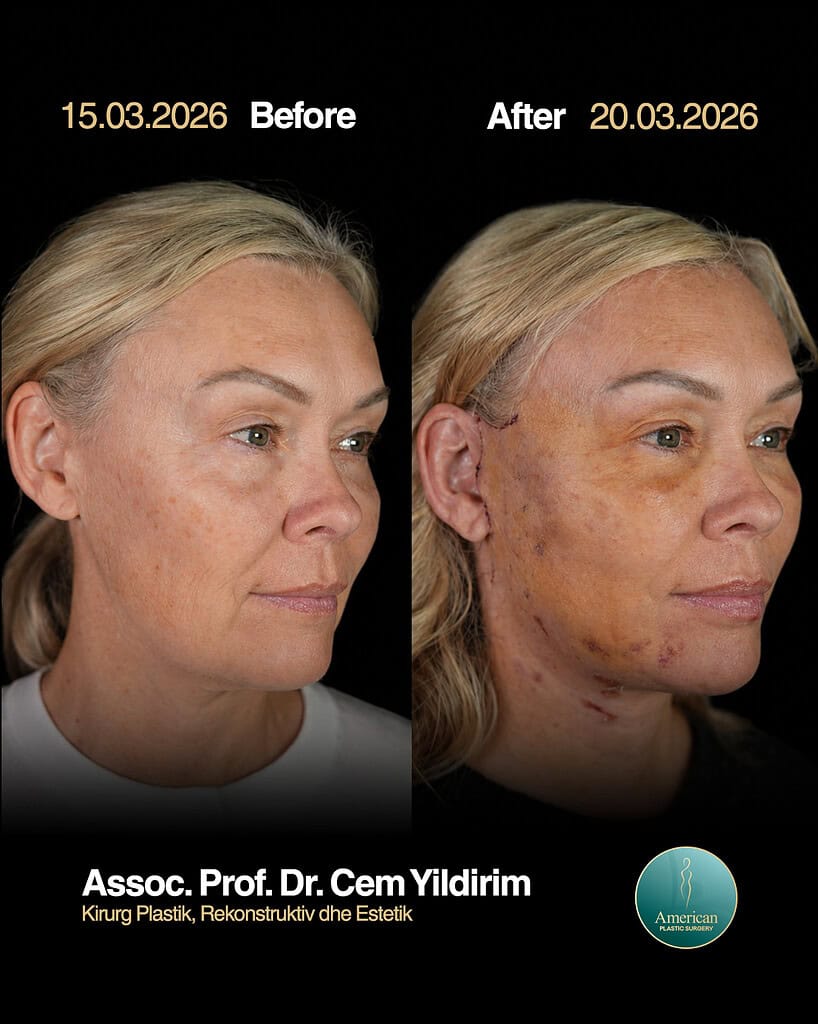
Photographs of other patients can help you understand the possible changes. American Hospital’s facelift page includes before-and-after photographs.
Look at the jawline, cheeks, and their relationship with the neck. Assess the face as a whole, from several angles where possible.
Ask how long it has been since surgery and whether additional procedures were performed. These details help you understand what the comparison shows.
A photograph represents the result of a patient with their own anatomy and healing response. Use it to discuss your preferences, while your plan is determined during the examination.
How long can the improvement last?
A facelift can create a long-term improvement, while natural ageing continues. Over time, the skin and tissues change again.
The durability of the appearance is influenced by your anatomy, tissue quality, procedure, and lifestyle factors. For this reason, an exact timeframe cannot be promised for every patient.
During the consultation, ask what changes you might expect over time and how you can support the result. Skin care and medical follow-up should be tailored to your needs.
If you later want another improvement, it can be assessed according to your condition at that time. There is no need to plan future procedures before understanding the outcome of your initial treatment.
What should you know about the risks?
A facelift is a surgical procedure and requires an open discussion of complications. These may include bleeding, infection, healing problems, asymmetry, or changes in sensation. There is also a risk of nerve injury affecting facial movement.
The surgeon should explain which risks apply to your case and how they are managed.
This conversation helps you prepare. Provide information about medications, smoking, allergies, and chronic conditions.
After surgery, notify the team about severe pain, swelling that increases suddenly, or unusual symptoms. Your discharge instructions should include contact details and the signs that require assessment.
How can you plan a facelift in Albania?
If you are travelling from abroad, discuss your dates before finalising bookings. Your stay should include preparation, surgery, and the necessary follow-up appointments.
Ask about a companion, transport, and help during the first few days. Plan a light schedule that allows you to rest and follow your instructions.
Clarify when you can travel, how communication will continue after your return, and which appointments require an in-person visit. Take your treatment summary and written care plan with you.
Prepare for your return to work as well. If your job involves frequent meetings or physical activity, discuss the time you may need according to your procedure.
Hospital care at American Hospital
Plastic surgery at American Hospital takes place within a hospital setting, with an anaesthesia team and medical support available 24/7. This complements care during surgery and your stay.
Before treatment, confirm the follow-up arrangements and the contact you will use after discharge. Your surgeon’s availability should be clarified according to your plan.
A good experience is supported by clear communication, preparation, and follow-up. These stages help you assess your result at the appropriate time.
Contact American Hospital for a facelift consultation in Albania. Discuss the changes you would like and learn what may be achievable in your case, so you can plan treatment with information and confidence.