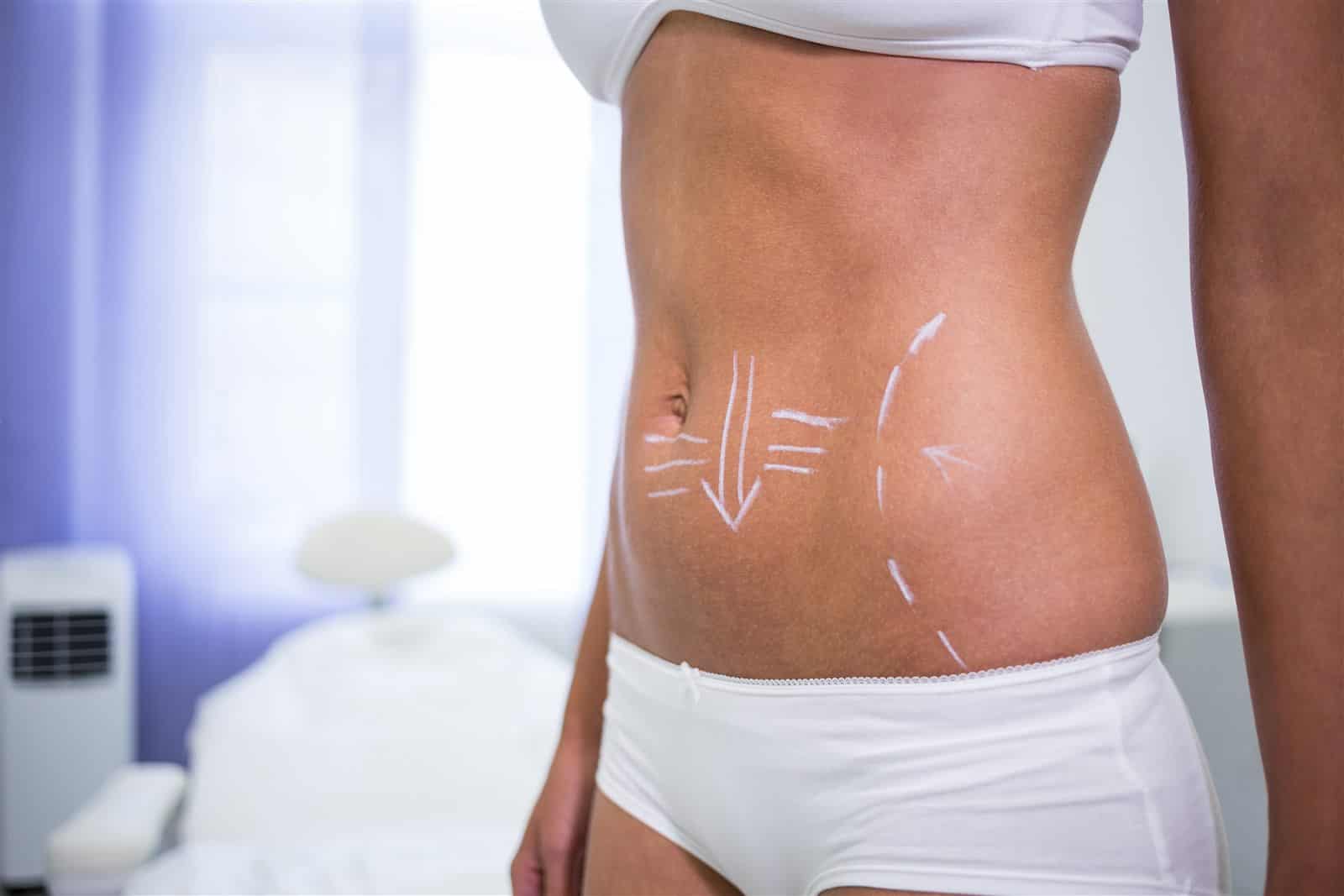
Few areas of the body frustrate people as much as the stomach. You can eat well, train consistently and still be left with a midsection that refuses to look the way you want. When that happens, two procedures usually come up in the same conversation: the tummy tuck and liposuction. They are often mentioned together, sometimes even confused with one another, but they solve fundamentally different problems.
Choosing correctly between them is one of the most important decisions you will make about abdominal contouring, because picking the wrong procedure leads to disappointing results. The key is understanding what is actually going on with your stomach: is it excess fat, loose skin, separated muscles, or a combination? This guide breaks down how each procedure works, who each one suits, and how a surgeon decides which is right.

What Liposuction Does
Liposuction is a fat-removal procedure. Through small incisions, a surgeon uses a thin cannula to break up and suction away localised deposits of fat that have not responded to diet and exercise. On the abdomen, it can refine the contour, flatten bulges and improve definition.
What liposuction does not do is tighten skin or repair muscle. It works best when the skin still has good elasticity, so that once the underlying fat is removed, the skin retracts smoothly over the new contour. This makes it an excellent choice for younger patients or anyone whose main concern is stubborn fat rather than loose tissue.
Because it is less invasive than a tummy tuck, liposuction generally involves a quicker, easier recovery. Modern variations such as laser liposuction and VASER liposuction offer refinements on the same principle, and a comprehensive 360 liposuction approach can address the entire midsection circumferentially.
What a Tummy Tuck Does
A tummy tuck, or abdominoplasty, is a more comprehensive procedure. It addresses three things liposuction cannot: excess loose skin, which is removed; separated or weakened abdominal muscles, which are repaired and tightened; and, often, some fat, which can be reduced at the same time.
This makes a tummy tuck the right choice for patients whose abdominal wall has been stretched, most commonly after pregnancy or significant weight loss. In these situations, no amount of fat removal alone will fix the problem, because the issue is loose skin and a slackened muscle wall, not just fat. The surgeon removes the surplus skin, tightens the muscles into a firmer internal corset, and repositions the belly button for a natural result.
The trade-off is that a tummy tuck is a bigger operation with a longer recovery and a scar, typically placed low across the abdomen where underwear or swimwear can conceal it. For patients with only a small amount of loose skin below the navel, a mini abdominoplasty may be sufficient, a distinction we explore in detail in our dedicated article.
The Key Question: Fat or Skin?
The single most useful way to think about the choice is to ask what is actually bothering you.
If you can pinch a pocket of firm fat but your skin is otherwise taut and springs back, liposuction alone is likely the answer. If, instead, you have loose, hanging skin, stretch marks below the navel, or a bulge that persists because your abdominal muscles have separated, then a tummy tuck is what addresses the underlying problem.
A simple self-test many surgeons describe is this: lie down and see whether the bulge flattens. If it largely disappears when lying flat, it may be mostly fat, suited to liposuction. If loose skin remains or the muscle wall bulges regardless of position, skin and muscle correction, a tummy tuck, is usually needed. This is a guide only, not a diagnosis, which is why an in-person assessment matters so much.

When the Answer Is Both
For many patients, particularly after pregnancy or major weight loss, the ideal solution combines the two. A surgeon can perform liposuction to refine the flanks and contour alongside a tummy tuck that removes loose skin and tightens the muscles. This combined approach produces a more sculpted, complete result than either procedure alone.
Combining procedures is also central to a mommy makeover, which often pairs abdominal surgery with breast procedures to restore the body after childbearing. Whether combining is appropriate depends on your health, the extent of surgery and your surgeon’s judgement, all assessed during consultation.
Who Is a Good Candidate?
Good candidates for either procedure are in generally good health, at or near a stable weight, non-smokers or willing to stop temporarily, and have realistic expectations. Weight stability matters because significant weight changes after surgery can undo the results, stretching skin again after a tummy tuck or altering the contour after liposuction.
It is also worth being clear that neither procedure is a weight-loss method. They are body-contouring procedures designed to refine shape, not to reduce overall body weight. Patients who are still planning major weight loss or a future pregnancy are usually advised to wait, so that their result lasts.
Recovery: What to Expect
Recovery differs significantly between the two, and this is often a deciding factor.
After liposuction, most patients are up and moving within a day or two, wear a compression garment to support the treated area, and return to desk work within about a week. Swelling settles over several weeks to a few months, revealing the final contour. Our week-by-week liposuction recovery timeline sets out what to expect.
After a tummy tuck, recovery is longer. Patients typically need to take it easy for a couple of weeks, avoid strenuous activity and heavy lifting for four to six weeks, and wear a supportive garment. Because the muscles have been repaired, patients move carefully at first and stand slightly bent for the first days. The reward is a dramatic, long-lasting improvement that liposuction alone cannot deliver for the right candidate.
Cost and Value to Consider
Because the two procedures differ in scope, they also differ in cost, and understanding this helps set expectations. Liposuction, as the less extensive procedure, is generally the more affordable of the two, while a tummy tuck, involving skin removal and muscle repair, sits at a higher price point. A combined tummy tuck and liposuction naturally costs more than either alone but can represent good value when it delivers in one operation what would otherwise take two.
For international patients, the savings compared with Western Europe are substantial, often in the region of 60 to 70 percent, which is a large part of why so many travel for body contouring. What matters, though, is not simply the lowest price but the total value: an experienced surgeon, a proper hospital setting, transparent all-inclusive pricing, and thorough aftercare. A quote that clearly sets out what is included allows a fair comparison and avoids surprises. Choosing the cheapest option in an unsuitable setting is a false economy when it comes to surgery.
Why the Hospital Setting Matters
Both procedures are performed under anesthesia, and a tummy tuck in particular is a significant operation. Having surgery within a full hospital rather than a standalone clinic means access to advanced anesthesia, intensive care backup, and immediate specialist support should it ever be needed.
At American Hospital, the plastic surgery department operates inside a complete medical facility with 24/7 monitoring, which is especially reassuring for international patients recovering away from home. The medical tourism team coordinates travel, accommodation and follow-up so the whole journey is managed.

Final Thoughts
The tummy tuck versus liposuction question is really a question about your own anatomy. Liposuction is the answer for stubborn fat with good skin; a tummy tuck is the answer for loose skin and separated muscles; and for many, a combination delivers the best result. There is no universally superior procedure, only the one that matches what your stomach actually needs.
The most reliable next step is a consultation, where a surgeon can examine your abdomen, understand your goals and recommend the approach that will give you the flat, firm result you are looking for.
Frequently Asked Questions
Is a tummy tuck better than liposuction?
Neither is universally better. Liposuction removes stubborn fat when skin is firm; a tummy tuck removes loose skin and tightens muscles. The right choice depends on whether your concern is fat, skin, or both.
Can I have liposuction and a tummy tuck together?
Yes. Many patients combine the two for a more complete result, and this is common after pregnancy or weight loss. Suitability is assessed during consultation.
Will liposuction get rid of loose skin?
No. Liposuction removes fat but does not tighten skin. If loose skin is your main concern, a tummy tuck is usually the appropriate procedure.
Which has the longer recovery?
A tummy tuck has a longer recovery than liposuction, since it involves removing skin and repairing muscle. Liposuction patients typically return to light activity sooner.
Are the results permanent?
Results are long-lasting when weight stays stable. Significant weight gain or a future pregnancy can affect the outcome of either procedure.