Rhinoplasty (nose reshaping) is one of the most sought-after cosmetic procedures in Europe. In recent years, a growing number of patients from Italy have chosen to travel to Albania for this surgery instead of having it done at home.
This trend is not accidental—it is driven by a combination of economic, medical, cultural, and systemic factors.
Below is a comprehensive breakdown of all the key reasons behind this medical tourism movement.
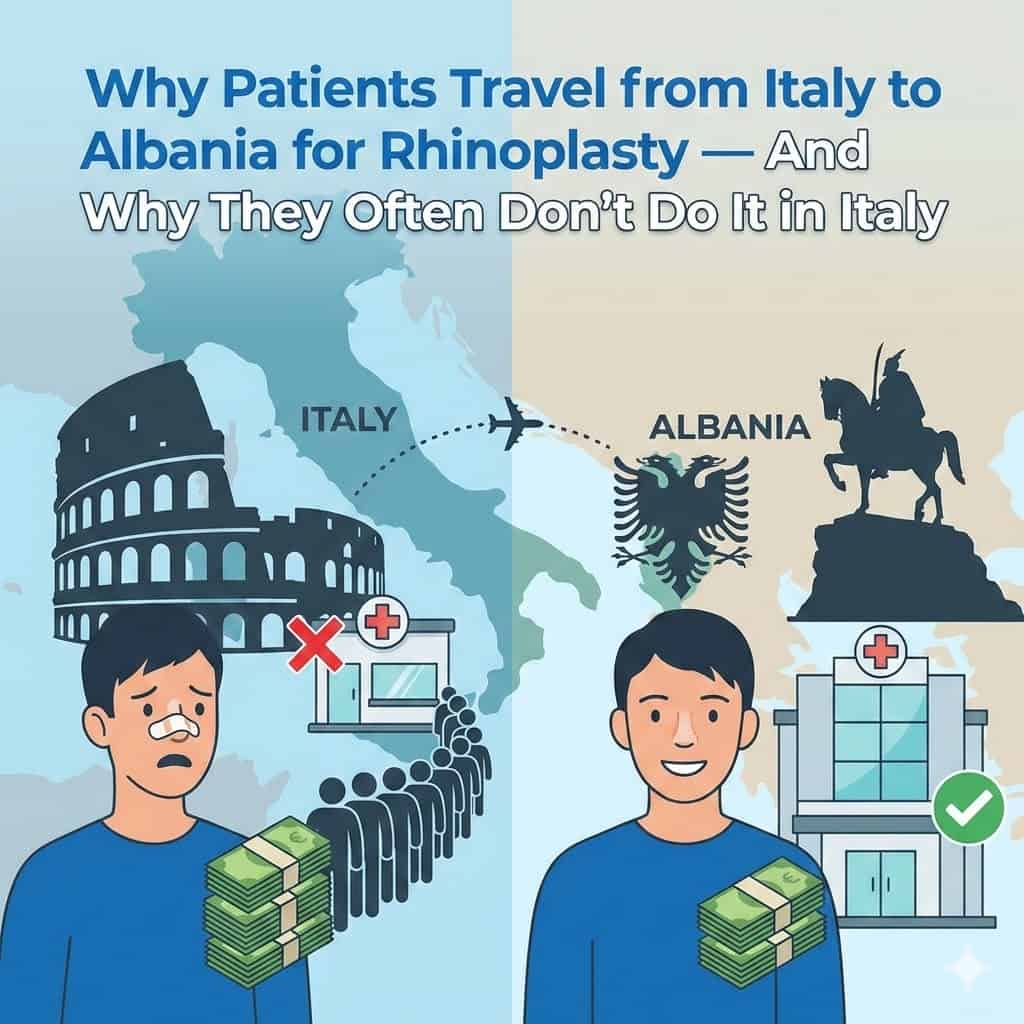
1. Significant Cost Differences
Italy
- Rhinoplasty in Italy typically costs €7,000–€12,000+
- Prices rise further in major cities (Milan, Rome)
- Private clinics dominate cosmetic surgery pricing
- Limited cost transparency
Albania
- Rhinoplasty costs €2,500–€4,500
- Packages often include:
- Surgeon fees
- Clinic & anesthesia
- Hospital stay
- Post-op care
- Transfers & accommodation support
Key reason: Patients can save 50–70% without compromising perceived quality.
2. Long Waiting Times in Italy
- In Italy, rhinoplasty is considered elective cosmetic surgery
- Public healthcare (SSN) does not cover it unless there is:
- Severe breathing impairment
- Trauma or congenital deformity
As a result:
- Public waiting lists can stretch months to years
- Private clinics offer faster access—but at very high prices
Albania’s Advantage
- Consultations and surgery often scheduled within days or weeks
- Streamlined booking processes
- No bureaucratic delays
3. Surgeon Specialization & Volume
Italy
- Many plastic surgeons are generalists
- Fewer surgeons focus almost exclusively on rhinoplasty
- Lower annual rhinoplasty case volume per surgeon
Albania
- Several surgeons specialize primarily in rhinoplasty
- High surgical volume leads to:
- Refined techniques
- Consistent aesthetic outcomes
- Experience with diverse nasal anatomies
Patients perceive Albanian surgeons as “nose specialists,” not general cosmetic surgeons.
4. Strong Reputation via Social Media & Word of Mouth
- Albanian clinics aggressively showcase:
- Before/after photos
- Healing timelines
- Video testimonials
- Italian patients often discover clinics via:
- TikTok
- Facebook groups
- Friends or family who already traveled
In contrast:
- Italian clinics are more conservative in marketing
- Fewer transparent visual results are publicly shared
5. Cultural & Aesthetic Preferences
Italian patients often seek:
- Natural-looking noses
- Preservation rhinoplasty
- Ethnic or facial-balance–focused results
Albanian surgeons are known for:
- Conservative refinements
- Avoiding over-operated looks
- Harmonizing the nose with Mediterranean facial features
Patients feel “understood” aesthetically.
6. Personalized Patient Experience
Italy
- Short consultation times
- Formal, clinical environment
- Less post-op communication once discharged
Albania
- One-to-one surgeon access
- Continuous WhatsApp / direct communication
- Hands-on follow-up during recovery
- Clinics treat patients as “guests,” not just cases
This hospitality-driven approach is a major emotional factor.
7. Easier Privacy & Discretion
Many Italian patients prefer:
- Recovering away from coworkers, friends, or family
- Avoiding social visibility during swelling & bruising
Albania offers:
- Discreet recovery
- Short stays (7–10 days)
- Anonymity abroad
8. Geographic Proximity & Accessibility
- Flights from Italy to Albania: 1–1.5 hours
- Low-cost airlines operate daily routes
- No visa requirements
- Minimal cultural or language barriers (many Albanians speak Italian)
Travel is often easier than going across Italy itself.
9. Modern Clinics & Updated Technology
Many Albanian clinics:
- Are newly built or renovated
- Invest heavily in:
- 3D imaging
- Modern operating theaters
- International-standard sterilization
Meanwhile, some Italian facilities:
- Operate in older hospital structures
- Focus more on reconstructive than aesthetic innovation
10. Lower Legal & Administrative Complexity
Italy
- Complex consent procedures
- Strong medico-legal environment
- Surgeons practice defensively
- Conservative surgical planning
Albania
- More flexible clinical environment
- Surgeons can be:
- More assertive
- More tailored in technique
- Less constrained by litigation concerns
This often leads to bolder yet controlled aesthetic results, which some patients prefer.
11. All-Inclusive Medical Tourism Packages
Albanian clinics often provide:
- Airport pickup
- Hotel coordination
- Translators or Italian-speaking staff
- Fixed, upfront pricing
Italian clinics rarely bundle services this way.
12. Psychological Value Perception
Even when quality is comparable:
- Patients associate high Italian prices with:
- Overhead costs
- Brand inflation
- Albania is seen as:
- High value
- Efficient
- Results-focused
This shifts trust away from geography and toward outcomes.
Final Summary
Italian patients choose Albania for rhinoplasty because of:
- Much lower costs
- Faster access
- Specialized surgeons
- Strong visual proof of results
- Personalized care
- Cultural alignment
- Short travel distance
They often don’t do it in Italy due to:
- High prices
- Long waits
- Bureaucracy
- Limited specialization
- Less transparency
In short: Albania offers a combination of affordability, specialization, and patient-centered care that many Italian patients find difficult to access at home.